
🛒 Best Price Today on Amazon
Prime members get fast, free shipping on everything above, plus member-only deals. New members get a 30-day free trial — cancel anytime.
Most generator buying guides start by asking which appliances you want to run. That is useful, but it skips a step: finding out how your particular house actually uses power. Two homes with the same square footage can need very different generators depending on heating fuel, water source, the age of the appliances and which loads are 240 volts. A short home power audit, done before you shop, turns guesses into numbers you can defend.
Start at the electrical panel
Open the panel door and read the circuit directory. Identify every double-pole breaker, the ones that take two slots. Those are 240-volt loads such as a well pump, electric water heater, dryer, range, central air conditioner, heat pump or electric baseboard heat. Each one can drive generator size up dramatically. Note the breaker rating on each; it gives an upper bound for that circuit’s current. A 30-amp double-pole breaker, for example, serves a load that could reach 7,200 watts.
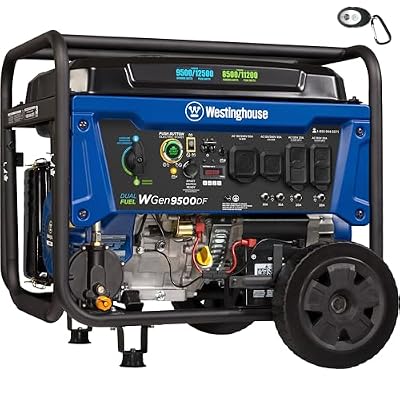
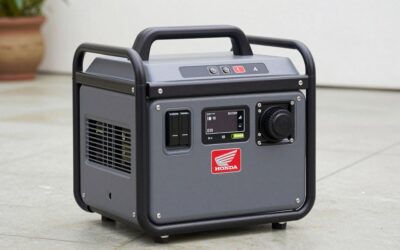
Westinghouse 12500 Watt Dual Fuel Home Backup Portable Generator, Remote Electric Start, Transfer Switch Ready, Gas and Propane Powered
Included for 'How to Calculate Your Homes Wattage Needs Before Buying a Generator' because the listing specifies Remote Electric Start and Transfer Switch Ready, details this guide uses to compare options.
View on Amazon
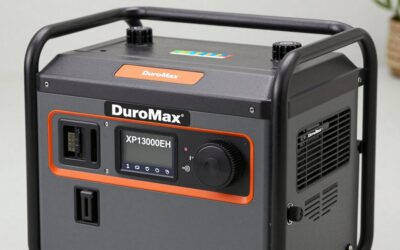
DuroStar DS13000MX 13,000-Watt 500cc Dual Fuel Portable Generator - Gas and Propane, Remote Electric Start, Whole Home Power Backup, Transfer Switch Ready, RV & Emergency Ready
Included for 'How to Calculate Your Homes Wattage Needs Before Buying a Generator' because the listing specifies 000-Watt 500cc Dual Fuel Portable Generator and Gas and Propane, details this guide uses to compare options.
View on Amazon
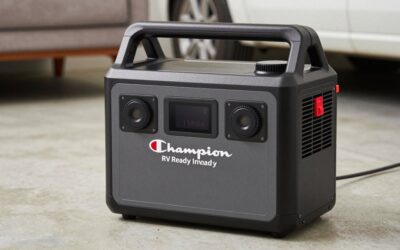
Westinghouse 14500 Peak Watt Tri-Fuel Home Backup Portable Generator, Remote Electric Start, Transfer Switch Ready, Gas, Propane, and Natural Gas Powered
Included for 'How to Calculate Your Homes Wattage Needs Before Buying a Generator' because the listing specifies Remote Electric Start and Transfer Switch Ready, details this guide uses to compare options.
View on Amazon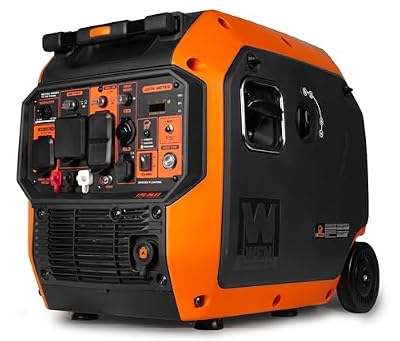
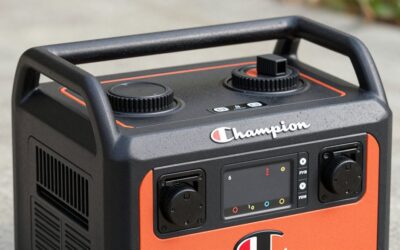
WEN 6800-Watt Dual Fuel RV-Ready Electric Start Portable Inverter Generator with Fuel Shut Off and CO Watchdog for Electric Vehicle Backup (DF680iX)
Included for 'How to Calculate Your Homes Wattage Needs Before Buying a Generator' as a relevant option in this category; details come from the product listing.
View on AmazonCheck the main breaker and service size
Most homes have a 100, 150 or 200 amp service. That tells you the theoretical maximum, not your real use, but it matters later if you consider a whole-home standby generator or an automatic transfer switch.
Use your utility bill and smart meter
Your bill shows monthly kWh. Divide by the number of days to get daily use. A typical all-season average of 25 to 35 kWh a day in a gas-heated home might rise to 50 to 80 kWh in an all-electric home in winter. Many utilities offer a web portal with hourly or 15-minute interval data from the smart meter. Look at the highest-demand hours in summer and winter; peak hourly kWh roughly equals your average kilowatt demand in that hour, a realistic ceiling for whole-home backup planning.
| Home profile | Typical daily use | Typical peak hourly demand | Essentials generator | Whole-home generator |
|---|---|---|---|---|
| Gas heat, city water, window AC | 15 – 25 kWh | 2 – 4 kW | 3,500 – 5,000 W | 10 – 14 kW |
| Gas heat, well water, central AC | 25 – 40 kWh | 4 – 7 kW | 7,500 – 9,500 W with 240 V | 18 – 22 kW |
| All-electric, heat pump | 30 – 60 kWh | 6 – 12 kW | 9,500 – 12,000 W with 240 V | 22 – 26 kW with load shedding |
| All-electric, resistance heat | 40 – 90 kWh (winter) | 10 – 20 kW | 12,000 W+ with load limits | 26 kW+ or not practical |
These are broad planning ranges; your own bills and interval data are the numbers to trust. Check the current spec sheet of any generator for its rated running output.
Measure the loads that matter
Plug-in monitors for 120-volt appliances
A plug-in energy monitor, typically $15 to $30, shows real watts and cumulative kWh. Run the refrigerator, chest freezer, CPAP and entertainment gear through it for 24 hours each. You will often find that actual running watts are well below nameplate ratings.
Clamp meters for hardwired loads
For the furnace blower, sump pump, well pump or central AC, an electrician or a confident homeowner can use a clamp-on ammeter at the equipment disconnect. Measure running current and, with an inrush-capable meter, starting current. For 240-volt loads multiply amps by 240. Always follow safety procedures when working near live conductors.
Whole-home energy monitors
Monitors installed in the panel with current transformers on the mains and major circuits show real-time and historical demand by circuit. They cost more but give the most complete picture, including which loads overlap in practice.
Turn the audit into a generator decision
With data in hand, group loads into must-run (refrigeration, heat, sump or well, medical), nice-to-have (window AC, microwave, TV) and avoid during outage (dryer, oven, electric water heater unless scheduled). Size a portable generator for must-run plus one or two nice-to-have loads, or size a standby generator using your peak interval data plus 20 to 25 percent headroom. Your transfer switch or interlock must include every circuit you plan to back up, including 240-volt circuits.
FAQ
Can I use my main breaker size to pick a generator?
No. A 200-amp service could theoretically supply 48 kW, but most homes never approach that. Size from real demand data, not panel capacity.
Do I need an electrician for a home power audit?
Reading the panel, bills and plug-in monitors is easy to do yourself. Clamp measurements on hardwired or 240-volt equipment and any transfer switch work are best left to a licensed electrician.
Bottom line
Calculate your home’s wattage needs from the panel directory, your utility interval data and real measurements of key appliances, not from a generic list. Identify 240-volt loads first, measure the must-run equipment, and size the generator to what actually overlaps in your house, plus 20 to 25 percent headroom.
Write Your Review
No reviews yet. Be the first to share your experience!