
🛒 Best Price Today on Amazon
Prime members get fast, free shipping on everything above, plus member-only deals. New members get a 30-day free trial — cancel anytime.
Apartment dwellers who want backup power or a small taste of solar face constraints that homeowners do not: limited space, landlord rules, building fire codes, and a balcony that may face the wrong direction. The comparison between a generator and a power station is short for this scenario, because fuel-burning generators are generally prohibited on apartment balconies and inside units. The more useful question is how to build a balcony-friendly power station and solar setup that actually delivers meaningful energy.
Why fuel generators are not an apartment option
Fuel-burning generators produce carbon monoxide and require fuel storage. Building fire codes, lease agreements, and property management rules commonly prohibit operating generators and storing gasoline or propane cylinders on balconies, patios, and inside units in multifamily buildings. Exhaust can drift into neighboring units through windows and vents. Even when a rule is not explicitly written into the lease, operating a generator on a balcony creates liability and safety risks. For apartments, a portable power station is the practical path.

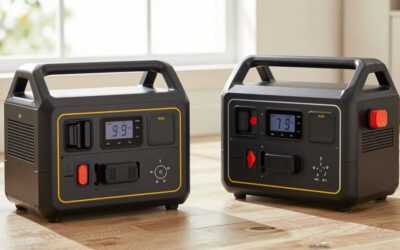
DaranEner 300W Portable Power Station with 30W Solar Panel
Included for 'Best Power Solution for Apartment Balcony Solar Setups: Generator or Power Station?' as a relevant option in this category; details come from the product listing.
View on Amazon
Jackery Explorer 300 Portable Power Station,292Wh
Included for 'Best Power Solution for Apartment Balcony Solar Setups: Generator or Power Station?' because the listing specifies 292Wh, details this guide uses to compare options.
View on Amazon
Portable Solar Generator 300W Portable Power Station with 60W Solar Panel
Included for 'Best Power Solution for Apartment Balcony Solar Setups: Generator or Power Station?' as a relevant option in this category; details come from the product listing.
View on Amazon
STARYLINE 1000W Portable Power Station 1024Wh LiFePO4 for Outdoor & Home
Included for 'Best Power Solution for Apartment Balcony Solar Setups: Generator or Power Station?' as a relevant option in this category; details come from the product listing.
View on AmazonWhat balcony solar can realistically produce
A balcony gets partial sun at best. Orientation, shading from the balcony above, and railings all reduce harvest.
| Balcony orientation | Panel on railing, 200W | Estimated daily harvest |
|---|---|---|
| South-facing (Northern Hemisphere), unshaded | 200W | 500–900Wh |
| South-facing, partial overhang shade | 200W | 300–600Wh |
| East or west-facing | 200W | 250–500Wh |
| North-facing | 200W | 50–150Wh |
These estimates assume portable panels hung vertically or tilted on a railing, with typical losses. A south-facing balcony with 200 to 400W of panels can realistically generate 0.5 to 1.5 kWh on a sunny day.
Power station sizing for apartments
For outage backup
An apartment outage plan usually covers phones, a router, lights, a laptop, a fan, and possibly a CPAP. That typically needs 500 to 1,500Wh per day. A 1,000 to 2,000Wh station covers one to three days, and balcony solar extends it.
For daily solar use
Some renters use balcony solar to power a home office or entertainment setup during the day, recharging the station from panels. A 1,000Wh station with 200 to 400W of panels can offset a workstation’s daily use on sunny days.
Plug-in balcony solar systems
In parts of Europe, plug-in balcony solar kits with microinverters that feed directly into a household outlet have become common and regulated. In the United States and many other regions, connecting solar to a home circuit through a wall outlet is generally not permitted without utility interconnection approval, and rules vary by state and utility. A power station avoids this issue entirely, because the panels charge the station’s battery and the station powers devices directly. Check local rules before considering any grid-tied plug-in system.
Comparison for apartment use
| Factor | Fuel generator | Power station + balcony solar |
|---|---|---|
| Allowed on balcony | Usually prohibited | Generally acceptable |
| Indoor use | Never | Yes |
| Noise | 50–70 dBA | Silent |
| Daily energy without grid | Unlimited with fuel | Stored capacity plus 0.3–1.5 kWh solar |
| Landlord approval needed | Likely prohibited | Check for panel mounting rules |
| Neighbor impact | Exhaust and noise | None |
Practical setup tips for renters
- Use freestanding panels or railing mounts that do not require drilling.
- Secure panels against wind with straps rated for the load; a panel falling from a balcony is dangerous.
- Route cables through a window seal or door gap without creating a trip hazard.
- Keep the station indoors, out of direct sun and rain.
- Check lease and building rules about balcony attachments before installing.
Worked example: a south-facing balcony
Take a renter with a 1,000Wh station and two 100W panels on a south-facing railing. On a clear day the panels return about 500 to 800Wh. Their outage essentials, router at 15W, laptop at 50W for eight hours, phone charging, and LED lamps for the evening, total about 650Wh. In sunny weather that is close to break-even, so the station stays near full for days. In a cloudy stretch the harvest may drop to 150 to 250Wh, and the stored capacity carries them about two days before they need to trim loads.
FAQ
Can I run a generator on my apartment balcony?
In most cases, no. Building codes, lease terms, and safety rules commonly prohibit fuel-burning generators on balconies and in multifamily units because of carbon monoxide and fire risks. A power station is the safe alternative.
How much power can a balcony solar panel produce?
A 200W panel on a south-facing, unshaded balcony may produce roughly 0.5 to 0.9 kWh on a sunny day. East, west, or shaded balconies produce less, and north-facing balconies produce very little.
Bottom line
For apartments, the answer is a power station: a 1,000 to 2,000Wh unit paired with 200 to 400W of balcony panels, kept indoors and charged from the railing. Fuel generators are typically off-limits on balconies, and a well-placed solar setup can cover phones, internet, lights, and a laptop through short outages and sunny workdays.
Write Your Review
No reviews yet. Be the first to share your experience!