
🛒 Best Price Today on Amazon
Prime members get fast, free shipping on everything above, plus member-only deals. New members get a 30-day free trial — cancel anytime.
Emergency preparedness planning usually splits into two scenarios: sheltering in place at home, and leaving quickly with what you can carry. Power fits into both, but the requirements are opposite. A shelter-in-place kit can include heavy equipment and stored fuel; a go-bag or car kit needs to be light, safe to transport, and ready after months on a shelf. This comparison examines where generators and power stations belong in a layered preparedness plan, and how to keep either one ready for the day you need it.
What preparedness power needs to cover
The core goals in the first 72 hours of most emergencies are communication, light, information, and preserving food and medication.

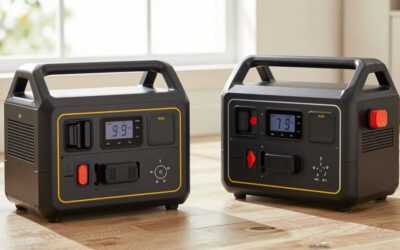
POWSTREAM 296Wh Portable Power Station with Solar Panel 60W Kit Solar Generator with Panels Included AC Outlet 300W Pure Sine Wave Solar Power Bank for Camping Home Power Outage Hunting Outdoor RV Van
Included for 'Best Power Solution for Emergency Preparedness Kits: Generator or Power Station?' as a relevant option in this category; details come from the product listing.
View on Amazon
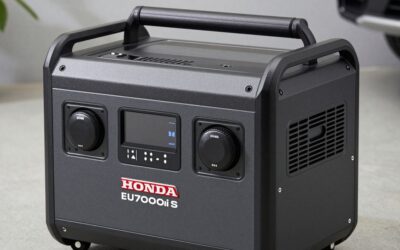
NEBO Intrepid 1800 Power Station, Portable 2400W Emergency Power Generator
Included for 'Best Power Solution for Emergency Preparedness Kits: Generator or Power Station?' because the listing specifies Portable 2400W Emergency Power Generator, details this guide uses to compare options.
View on Amazon
WEN 300-Watt 269Wh Lithium-Ion Power Station and Battery-Powered Inverter Generator (PP300i)
Included for 'Best Power Solution for Emergency Preparedness Kits: Generator or Power Station?' as a relevant option in this category; details come from the product listing.
View on Amazon
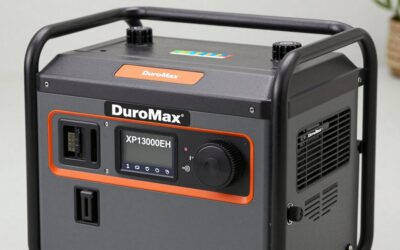
Oxseryn 2800-Watts Portable Inverter Generator, Gas Generators for Home Use, Camping, Super Quiet Emergency Home Backup, with Fuel Shut Off, 1.1Gal Fuel Tank, 39Lbs, EPA Compliant
Included for 'Best Power Solution for Emergency Preparedness Kits: Generator or Power Station?' because the listing specifies Gas Generators for Home Use and Camping, details this guide uses to compare options.
View on Amazon| Need | Typical device | Draw | 72-hour energy |
|---|---|---|---|
| Communication | Two phones | 5–15W while charging | 60–150Wh |
| Information | Emergency radio | 1–5W | 20–100Wh |
| Light | LED lanterns, headlamps | 3–10W | 50–200Wh |
| Internet | Router and modem | 10–25W | 300–600Wh |
| Medication cooling | Compact fridge | 50–100W cycling | 0.9–2 kWh |
| Food preservation | Full refrigerator | 100–250W cycling | 3–6 kWh |
| Medical devices | CPAP | 30–60W | 0.7–1.5 kWh (3 nights) |
Communication, light, and information need under 500Wh for three days. Food preservation and medical devices are what push you into larger systems.
Go-bag and vehicle kits: power stations win clearly
A generator has no place in a go-bag, and transporting fuel inside a car during an evacuation is hazardous. For portable kits, the options are power banks, small stations, and solar.
- A 20,000 to 30,000mAh power bank, roughly 70 to 110Wh, keeps two phones charged for three days.
- A 250 to 500Wh power station adds laptop charging, a CPAP for a night or two, and a small fan, at 7 to 13 lb.
- A 60 to 100W folding panel recharges both in daylight.
Keeping a station ready
Lithium stations slowly self-discharge. Most manufacturers recommend storing at a partial charge and topping up every three to six months. Put a recurring reminder on your calendar, and check it whenever you rotate food and water in the kit.
Where to store it
Heat shortens battery life, so a station kept in a car trunk through summer ages faster than one in a closet. Store kit stations indoors near the go-bag, at roughly 50 to 80 percent charge, with the charging cable, a car adapter, and the solar lead packed in the same pouch. The best preparedness gear is the gear you can grab in under a minute without searching for cables.
Shelter-in-place kits: both have a role
At home, capacity and duration matter more than portability. A power station of 1,000 to 2,000Wh keeps communications, lights, medications, and a CPAP going for several days, silently and safely indoors. A generator adds the capability to run a full refrigerator, freezer, and sump or well pump for extended outages.
Storage readiness for a generator
A generator stored for a year with gasoline in the carburetor is likely to fail when needed. For preparedness, favor dual fuel models that can run on propane, which stores for years. If you use gasoline, add stabilizer, run the generator monthly for 10 to 15 minutes, and rotate stored fuel into your vehicle every few months.
Comparing the two for preparedness
| Factor | Power station | Generator |
|---|---|---|
| Go-bag or evacuation friendly | Yes (250–1,000Wh sizes) | No |
| Safe indoors | Yes | Never |
| Readiness after 6 months on a shelf | Good, if topped up | Poor with stale gas; good with propane |
| Runs full fridge for days | Needs 2,000Wh+ and recharge | Yes |
| Ongoing maintenance | Charge checks | Fuel, oil, test runs |
| Useful in apartments | Yes | Usually prohibited |
A layered preparedness plan
| Layer | Equipment | Covers |
|---|---|---|
| Personal | Power bank + hand-crank radio | Phone, news, light |
| Portable | 250–500Wh station + 60–100W panel | Evacuation, car, 1–3 days of essentials |
| Home | 1,000–2,000Wh station | Indoor essentials, CPAP, router |
| Extended | Dual fuel generator + stored propane | Fridge, freezer, pumps, long outages |
FAQ
Should a generator be part of an emergency kit?
It belongs in a home shelter-in-place plan if you face multi-day outages or need to run a refrigerator or well pump. It does not belong in a go-bag or evacuation kit.
How often should I check a power station in an emergency kit?
Every three to six months. Top it up, test the outputs, and confirm cables and adapters are still in the kit.
Bottom line
For preparedness kits, a power station is the core: small units for go-bags and vehicles, a larger unit for home shelter-in-place. Add a dual fuel generator with stored propane only if your home plan must cover multi-day outages with full refrigeration or pumps, and schedule regular readiness checks for both.
Write Your Review
No reviews yet. Be the first to share your experience!