
🛒 Best Price Today on Amazon
Prime members get fast, free shipping on everything above, plus member-only deals. New members get a 30-day free trial — cancel anytime.
- Top Picks at a Glance
- Comparison Table
- 1. Generac 22 kW Whole Home Generator: Best for Whole-House Backup
- 2. Generac Guardian 10 kW: Best for Essential Circuits
- 3. Honeywell 14 kW Home Standby Generator: Best Mid-Size Value
- 4. Champion 22,000-Watt Dual Fuel Standby Generator: Best Large Dual-Fuel Unit
- 5. Kohler 20RESCL-200SELS: Best for Buyers Who Want a Long-Established Brand
- 6. Champion 12.5 kW Standby Generator With 100-Amp Switch: Best Smaller Pick
- Also Consider
- How We Chose
- Buying Guide: How to Size and Choose a Home Standby Generator
- Common Mistakes
- Frequently Asked Questions
- Which One Should You Buy?
- Sources
The best home standby generator for most houses is a 14 to 22 kW natural gas or propane unit with an automatic transfer switch, and our top pick for a typical whole-house backup is the Generac 22 kW with transfer switch, with the Generac Guardian 10 kW as the best entry point for essential circuits. This guide to the best home standby generators is built around sizing, because the kW number you choose decides what the unit can run, how often it struggles and how much the installation costs. We compare six permanent standby models from Generac, Honeywell, Champion and Kohler by size, fuel, transfer switch and monitoring features. It is research-based: we did not personally use these products, and anything the listing does not state is marked “not listed”.
This page is a sizing-first guide to permanent standby units, not a repeat of a general whole-house roundup. If you are still deciding between a portable and a permanent unit, our guide on choosing between portable and standby generators covers that decision. Here we assume you have decided on a permanently installed generator that starts by itself when the power fails. We avoid exact installed-cost numbers, because quotes depend on your electrical panel, gas line, permit rules and local labor rates.

Generac 14kW Whole Home Generator, Transfer Switch & Cellular Capability | Whole House Backup Power, Automatic 200 Amp Transfer Switch, Outdoor Gas Propane, Protects Home Outages, Storm Protection
Included for 'Home Standby Generators Sized by kW: Generac, Champion and Kohler' because the listing specifies Transfer Switch & Cellular Capability and Whole House Backup Power, details this guide uses to compare options.
View on AmazonGenerac 22kW Whole Home Generator, Transfer Switch & Cellular Capability | Whole House Backup Power, Automatic 200 Amp Transfer Switch, Outdoor Gas Propane, Protects Home Outages, Storm Protection
Included for 'Home Standby Generators Sized by kW: Generac, Champion and Kohler' because the listing specifies Transfer Switch & Cellular Capability and Whole House Backup Power, details this guide uses to compare options.
View on Amazon
Generac 18kW Whole Home Generator, Cellular Capability | Automatic Backup Power, Whole House Coverage, WiFi & Cellular Monitoring, Weather-Activated, Natural Gas or Propane Ready
Included for 'Home Standby Generators Sized by kW: Generac, Champion and Kohler' because the listing specifies Cellular Capability and Automatic Backup Power, details this guide uses to compare options.
View on AmazonGenerac 24kW Whole Home Generator, Transfer Switch & Cellular Capability | Whole House Backup Power, Automatic 200 Amp Transfer Switch, Outdoor Gas Propane, Protects Home Outages, Storm Protection
Included for 'Home Standby Generators Sized by kW: Generac, Champion and Kohler' because the listing specifies Transfer Switch & Cellular Capability and Whole House Backup Power, details this guide uses to compare options.
View on AmazonTop Picks at a Glance
- Best Overall for Whole-House Backup: Generac 22 kW Whole Home Generator with 200 Amp transfer switch and cellular capability.
- Best for Essential Circuits: Generac Guardian 10 kW with transfer switch and WiFi monitoring.
- Best Mid-Size Value: Honeywell 14 kW Home Standby Generator (natural gas or propane).
- Best Dual-Fuel Large Unit: Champion 22,000-Watt dual fuel (LP/natural gas) with 200-Amp automatic transfer switch.
- Best Premium Brand: Kohler 20RESCL-200SELS 20 kW air-cooled with 200 Amp whole-house transfer switch.
- Best Smaller Dual-Purpose Pick: Champion 12.5 kW with 100-Amp outdoor-rated automatic transfer switch.
Comparison Table
| Model | Best for | Key specs (from listing) | Watch for | Price tier |
|---|---|---|---|---|
| Generac 22 kW Whole Home | Large homes with central air | 22 kW, automatic 200 Amp transfer switch, cellular capability | Fuel line and pad needs for a big unit | Premium |
| Generac Guardian 10 kW | Essential circuits in a mid-size home | 10 kW, transfer switch, WiFi monitoring, natural gas or propane | Will not run everything at once | Mid-range |
| Honeywell 14 kW | Mid-size homes | 14 kW, natural gas or propane, weather-protected enclosure wording | Transfer switch details not listed | Mid-range |
| Champion 22,000-Watt Dual Fuel | Whole-house coverage with fuel choice | 22,000 W, LP or natural gas, 200-Amp automatic transfer switch | Heavy, needs a proper pad and gas supply | Premium |
| Kohler 20RESCL-200SELS | Buyers who want a long-established brand | 20 kW, air-cooled, 200 Amp whole-house switch, service entrance rated, load shed | Dealer service network matters | Premium |
| Champion 12.5 kW | Smaller homes and priority loads | 12.5 kW, 100-Amp outdoor-rated automatic transfer switch | 100 Amp switch means a partial-home design | Mid-range |
1. Generac 22 kW Whole Home Generator: Best for Whole-House Backup
- 22 kW output.
- Automatic 200 Amp transfer switch included per the listing.
- Cellular capability for remote monitoring.
- Whole-house coverage described in the listing.
- Fuel type: natural gas or propane is typical for this class; confirm on the spec sheet because the listing text is brief.
Best for: a larger house, a home with central air conditioning, an electric water heater or a well pump. Skip if: you only need to run a refrigerator, a furnace blower, lights and a sump pump, where a 10 to 14 kW unit is enough.
A 22 kW standby unit is the point where whole-house backup gets realistic for many homes. The big loads in a house are the air conditioner, the electric range and dryer, an electric water heater and a well pump. These are motor and heating loads, and the start-up surge of an air conditioner can be several times its running load. A 200 Amp transfer switch matches a typical 200 Amp service panel, which means the generator can power the full panel, with the unit managing loads. In practice, many installers add load management modules so the unit can shed an air conditioner or a dryer when the demand gets too high.
The cellular capability in the title points to remote status monitoring through an app, which is useful if you are away when the power fails. Subscription terms and coverage areas: not listed. Check the maker’s page before you count on it.
Pros: large capacity, 200 Amp switch included, remote monitoring option, widely supported brand. Cons: premium tier, bigger gas demand, needs a larger pad and clearances.
2. Generac Guardian 10 kW: Best for Essential Circuits
- 10 kW output.
- Transfer switch included.
- WiFi monitoring.
- Runs on natural gas or propane per the listing.
- Whole-house backup wording in the title; in practice this size is usually wired to a priority-circuit subpanel.
Best for: a home where you want to keep the refrigerator, freezer, furnace blower or boiler, lights, a sump pump and some outlets running through an outage. Skip if: you want to run a large central air conditioner at the same time as electric cooking.
A 10 kW unit is a sensible size for a home that uses gas for heat, cooking and hot water. The goal is to power the circuits that protect the house and keep it livable. With a smart load-management setup, some owners run a small air conditioner too. The main trade-off is clear: you give up the luxury of running everything at once to save on the unit, the gas line and the pad.
WiFi monitoring lets you check status and run history from a phone, which helps with maintenance reminders. Exercise cycles are usually weekly, and the unit runs briefly by itself to keep the engine ready. Noise during exercise is a neighbor consideration, so ask for the sound rating on the spec sheet.
Pros: approachable tier for a name-brand standby, transfer switch included, remote monitoring, dual fuel capability by conversion or labeled fuel. Cons: limited capacity for large homes, load planning needed, warranty details not listed.
3. Honeywell 14 kW Home Standby Generator: Best Mid-Size Value
- 14 kW output.
- Runs on natural gas or propane per the listing.
- Described as automatic backup power for the whole home.
- Weather-protected housing wording is in the listing; enclosure material and sound rating: not listed.
- Transfer switch: not listed in the title, so confirm whether it is included.
Best for: mid-size homes that need more than a 10 kW unit offers, without stepping up to 20 kW and above. Skip if: you cannot confirm which transfer switch is in the box and which brand of installers in your area will service it.
A 14 kW unit covers a lot of mid-size houses with a moderate cooling load. If the home has a 2 to 3 ton air conditioner, gas heat and gas hot water, a 14 kW unit can run the whole panel with sensible load management. The question to ask is service. Ask local installers whether they stock parts and whether they will perform warranty service on this brand. A generator that no one nearby will touch is a risk, however good the spec sheet looks.
Pros: mid-size capacity, natural gas or propane, recognizable brand name. Cons: transfer switch not confirmed in the listing, service network varies by region, fewer details available.
4. Champion 22,000-Watt Dual Fuel Standby Generator: Best Large Dual-Fuel Unit
- 22,000 W output.
- Dual fuel: liquid propane or natural gas.
- 200-Amp automatic transfer switch included per the listing.
- Whole-house standby design.
Best for: large homes where you want the choice of natural gas or propane, for example if the gas utility connection is planned after the generator is installed. Skip if: your gas meter or service line cannot supply a unit this size.
Dual fuel matters in two situations. First, if natural gas pressure drops during a regional emergency, a unit that can use a propane tank gives you another path. Second, homes without a natural gas line can run propane from a large tank. Propane sizing and refilling schedules are a practical consideration: a bigger tank gives longer runtime during multi-day outages, and tank placement is governed by local codes and the supplier.
The natural gas supply needs to be checked by a licensed gas fitter. A 22 kW generator at full load draws a lot of fuel by the hour, and an undersized meter or pipe will starve the engine. Quotes should include a gas-flow check.
Pros: dual fuel, 200 Amp switch included, large capacity, whole-house coverage. Cons: premium tier, heavy and needs a strong pad, gas supply must be verified.
5. Kohler 20RESCL-200SELS: Best for Buyers Who Want a Long-Established Brand
- 20 kW (20,000 W) air-cooled standby generator.
- 200 Amp whole-house transfer switch.
- Service entrance rated.
- Load shed feature in the listing text.
- Fuel type: Kohler’s RESCL series is sold for natural gas or propane; confirm the setup on the model sheet.
Best for: a home where the transfer switch needs to sit at the service entrance, which can simplify wiring in some panel layouts. Skip if: there is no authorized dealer near you.
Service entrance rated means the transfer switch can serve as the main disconnect for the building, in places where code allows it. This can reduce the amount of extra equipment in the installation. The load shed feature in the listing supports a common approach to a 20 kW unit: it can turn off lower-priority loads such as an air conditioner or dryer if the demand gets too high, protecting the engine and keeping essential loads running.
Air-cooled engines are typical in residential standby units. They are quieter and cheaper than liquid-cooled units but can run hotter, which is why maintenance matters: oil changes, air filter replacement and battery checks follow a schedule in the manual. Ask the dealer about the maintenance plan.
Pros: established brand, service entrance rated switch, load shed, 20 kW capacity. Cons: premium tier, dealer-dependent service, air-cooled maintenance schedule.
6. Champion 12.5 kW Standby Generator With 100-Amp Switch: Best Smaller Pick
- 12.5 kW output.
- 100-Amp outdoor-rated automatic transfer switch included per the listing.
- Home standby design.
- Fuel type: not listed in the title; confirm before you buy.
Best for: smaller homes or houses where the owner wants to back up a selected group of circuits. Skip if: you want a 200 Amp switch to cover a whole panel.
A 100 Amp switch and a 12.5 kW generator suit a partial-home design, where the critical circuits move to a subpanel. This approach limits what the generator needs to carry and often costs less than a full-panel installation. It also forces you to decide ahead of time what matters most: refrigeration, heat, water, a few outlets and lighting. That decision is useful, because it prevents the common mistake of buying power you cannot actually use.
Pros: practical size for essential circuits, outdoor-rated switch included, mid-range tier. Cons: limited by the 100 Amp switch, fuel details not listed, not for a full panel.
Also Consider
Generac 14 kW Whole Home Generator
A 14 kW unit in the same line as the Guardian, with cellular capability per the listing. A good middle step if 10 kW feels tight and 22 kW feels like too much.
Kohler 10 kW Standby Generator
A 10 kW Kohler listing with limited details in the title. Check the model number, fuel type and switch before comparing it with the Guardian.
Westinghouse 14500 Peak Watt Tri-Fuel Portable Generator
Not a permanent standby unit, but listed as transfer switch ready and able to run on gas, propane and natural gas. A lower-cost route if you accept manual starting.
Generac 200 Amp Next Gen Automatic Transfer Switch
A standalone service-entrance-rated automatic transfer switch with surge protection, relevant if you are pairing a unit with a separate switch. Match the brand and the generator model before ordering.
How We Chose
We worked from manufacturer-style listing details, published guidance on standby generator installation from the National Fire Protection Association and the National Electrical Code, and consumer safety guidance from the U.S. Consumer Product Safety Commission on carbon monoxide. We did not personally use these units, and we did not run load or noise measurements. Each pick had to be a real, permanently installed standby generator from a recognizable maker with a stated kW rating, and we preferred listings that mention a transfer switch. We use price tiers instead of exact prices, and we avoid installation cost claims because they vary by region, permit, gas and electrical work.
Buying Guide: How to Size and Choose a Home Standby Generator
Start with a load list
Make a list of what you want to run during an outage, then note the running watts and the starting watts for each. Start-up surges for motors are higher than running loads. The following are typical figures, but the nameplate on your own equipment is what counts.
| Load | Typical running watts | Typical starting watts |
|---|---|---|
| Refrigerator | 700 | 2,200 |
| Furnace blower | 600 to 1,000 | 1,500 to 2,500 |
| Sump pump (1/2 HP) | 800 | 2,000 |
| Well pump (1/2 HP) | 1,000 | 2,100 |
| Central air conditioner (3 ton) | 3,500 | 9,000 or more without soft start |
| Electric water heater | 4,500 | 4,500 |
| Lights and small electronics | 500 to 1,000 | 500 to 1,000 |
Add the loads and compare
Take a home that wants refrigeration, a furnace blower, a sump pump, a well pump, lights and a 3 ton air conditioner. The running total is about 7,100 to 8,000 watts, but the air conditioner start-up alone can add several thousand watts, which is why many installers recommend a 14 kW class unit or larger for this home, or a soft-start device on the air conditioner. A smaller house with gas heat and no air conditioning may do fine on 10 kW. These are planning figures. Ask your installer for a load calculation based on your panel and your equipment.
Pick the transfer switch size
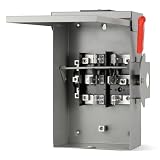
A 100 Amp switch usually serves a subpanel of critical loads. A 200 Amp switch serves a whole panel and usually calls for a larger generator and load management. Service entrance rated switches can act as the main disconnect where code allows it. Your electrician and the local building department decide what is permitted.
Think through fuel
Natural gas means no refilling and a steady supply in many outages, but it depends on the utility and on correct pipe and meter sizing. Propane means a tank you can fill, with runtime set by tank size, but you need to schedule refills. Dual-fuel units give you flexibility. Gas piping must be installed by a licensed professional, and some regions require permits and inspection.
Plan the site and installation
Standby generators run outdoors only, on a stable pad, and must keep manufacturer-specified clearances from windows, doors, vents and structures. Carbon monoxide is odorless and deadly, so a battery or plug-in CO alarm inside the house is smart. Wiring, transfer switch work, gas lines and permits should be handled by licensed professionals. Never connect a generator to home wiring without an approved transfer switch.
Consider monitoring and service
WiFi or cellular monitoring reports status, maintenance reminders and faults. Look at warranty length, who performs service in your area and how often maintenance is required. A well-supported mid-range unit often beats a premium unit with no local service.
Common Mistakes
- Buying by kW alone without checking the transfer switch size and the panel it must serve.
- Ignoring the start-up surge of an air conditioner or well pump.
- Not asking a gas fitter to confirm meter and pipe capacity for natural gas.
- Placing the unit too close to windows or vents.
- Skipping scheduled maintenance, which is what makes the unit start when needed.
Frequently Asked Questions
What are the best home standby generators?
The best choice depends on size. For whole-house coverage, the Generac 22 kW and the Champion 22,000-Watt are top options. For essential circuits, the Generac Guardian 10 kW or the Champion 12.5 kW are more practical.
What size standby generator do I need?
Add the running watts of the items you want to power, then allow for starting surges. Many mid-size homes land in the 10 to 14 kW range, and larger homes with central air often need 20 kW or more. A licensed installer should perform a load calculation.
Are natural gas home generators better than propane?
Natural gas avoids refilling and keeps running as long as the utility supply holds. Propane stores in a tank and works where there is no gas line. Dual-fuel units cover both. Fuel choice is mostly about your property and local supply.
Do I need a transfer switch with a standby generator?
Yes. An automatic transfer switch safely isolates your home from the utility grid and switches power to the generator. This prevents back-feeding power onto the grid, which is dangerous to line workers. Installation must be done by a licensed electrician.
Are home electric backup generators the same as battery systems?
No. A standby generator is a fuel-powered engine and alternator. Battery backup systems store energy and typically cover smaller loads for a limited time. Some homes use both.
How often does a standby generator need maintenance?
Most makers call for an annual service and periodic checks of oil, filters, spark plugs and the battery, plus a weekly self-test run. Follow the schedule in your manual.
Can a standby generator run my whole house?
A large unit with a 200 Amp switch and load management can run most of a house, but very large loads can be shed to stay within capacity. Whether it runs everything at once depends on size and the equipment in your home.
Which One Should You Buy?
For a typical larger home with central air, start with the Generac 22 kW or the Champion 22,000-Watt dual fuel. For a mid-size home, the Honeywell 14 kW is worth comparing if local service exists. For essential circuits, the Generac Guardian 10 kW or the Champion 12.5 kW is easier to justify. If you want a long-established brand with a service entrance rated switch, look at the Kohler 20 kW. Whichever you choose, get a written load calculation, confirm gas supply and clearances, use licensed professionals for the transfer switch and gas work, and keep a CO alarm inside the house.
Sources
- National Fire Protection Association: NFPA 37 and NFPA 70 (National Electrical Code) guidance on standby generators
- U.S. Consumer Product Safety Commission: carbon monoxide and generator safety
- Manufacturer product pages: Generac, Honeywell, Champion Power Equipment, Kohler
- U.S. Department of Energy: guidance on backup power and outages
Last updated: October 2026




Write Your Review
No reviews yet. Be the first to share your experience!