
🛒 Best Price Today on Amazon
Prime members get fast, free shipping on everything above, plus member-only deals. New members get a 30-day free trial — cancel anytime.
Once school starts, campgrounds empty out, rates often drop, and fall is prime time for RV trips. But shoulder season brings different power needs: cooler nights that call for furnace fans or electric blankets, shorter days that cut solar harvest, and more boondocking as some campground services close for the season. This guide covers how to power an RV or camper for fall trips with power stations, solar, and generators.
How fall changes RV power needs
- Heating: The propane furnace blower on many RVs draws significant 12V current, often roughly 3 to 8 amps, which drains house batteries overnight.
- Less sun: Shorter days and lower sun angles reduce solar production versus summer, commonly by a third or more depending on latitude.
- More dry camping: Off-season availability and quieter spots attract boondocking, where hookups are absent.
- Quiet hours: Many campgrounds restrict generator use at night.
Estimating daily needs
| Load | Typical draw | Hours/day (fall) | Daily Wh |
|---|---|---|---|
| Furnace blower (12V) | 40-90 W | 6-10 (cycling) | 240-900 |
| 12V compressor fridge | 40-60 W | cycling | 400-800 |
| LED lights | 20-40 W | 5 | 100-200 |
| Water pump | 50-80 W | 0.5 | 25-40 |
| Phones, laptop | 30-80 W | 3 | 90-240 |
| Electric blanket (low) | 30-60 W | 6 | 180-360 |
That totals roughly 1 to 2.5 kWh per day for a typical fall trip without air conditioning or electric cooking.

Jackery Solar Generator 300 and 40W Solar Panel,292Wh,300W AC
Included for 'Back-to-School RV Season: Best Portable Power for Fall Road Trips' because the listing specifies 292Wh and 300W AC, details this guide uses to compare options.
View on Amazon
Jackery Solar Generator 1000 v2 and 200W Solar Panel,1070Wh,1500W AC
Included for 'Back-to-School RV Season: Best Portable Power for Fall Road Trips' because the listing specifies 1070Wh and 1500W AC, details this guide uses to compare options.
View on Amazon
Jackery Explorer 2000 v2 Portable Power Station, 2042Wh, 2200W AC Output
Included for 'Back-to-School RV Season: Best Portable Power for Fall Road Trips' because the listing specifies 2042Wh and 2200W AC Output, details this guide uses to compare options.
View on Amazon
Jackery Explorer 2000 Plus Portable Power Station, 2042Wh, 3000W AC Output
Included for 'Back-to-School RV Season: Best Portable Power for Fall Road Trips' because the listing specifies 2042Wh and 3000W AC Output, details this guide uses to compare options.
View on AmazonOptions compared
Portable power station
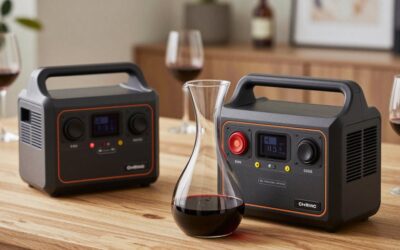
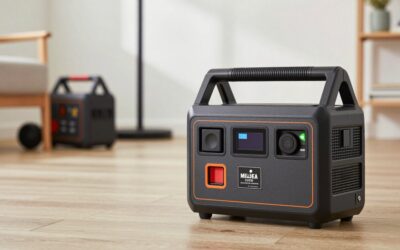
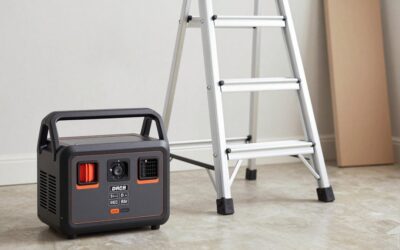
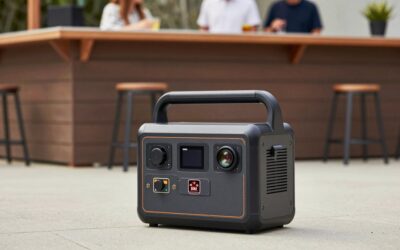
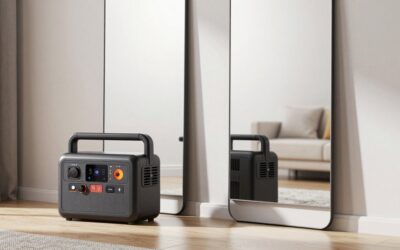
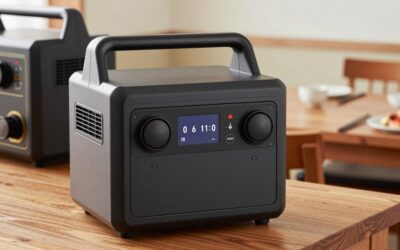
A 1 to 3 kWh station can run from the RV’s 12V system via proper connections, or power loads directly. It is quiet, safe inside the RV, and portable between vehicles. Stations with high-current DC outputs or RV-style 30A outlets simplify integration.
Solar panels
Portable folding panels of 200 to 400 watts help, but in fall, expect roughly 3 to 4 peak sun hours in many U.S. regions. A 400W panel array might produce about 1 to 1.4 kWh on a clear fall day after losses. Positioning panels to face the sun and adjusting angle helps more in fall than summer.
Inverter generator
A 2,000 to 3,500-watt inverter generator recharges batteries quickly and runs microwaves or AC. Quiet-running models matter for campground rules. Always run it outside the RV, away from windows, vents, and neighbors’ sites, with exhaust directed away. Never run it inside a toy hauler garage.
Recommended combos
| Trip style | Suggested setup |
|---|---|
| Weekend at a campground with hookups | Small station (500-1,000 Wh) for bedside/overnight use |
| 3-5 days boondocking | 2-3 kWh station + 400 W solar |
| Week+ boondocking, cold nights | 2-3 kWh station + 400 W solar + 2,000 W inverter generator |
| Need microwave/AC | 3,000 W+ inverter generator or large station with 30A output |
Cold-weather battery notes
Lithium stations cannot charge below freezing unless they have built-in heating. Keep the station inside the heated RV, not in an exterior compartment. Lead-acid RV house batteries also lose capacity in the cold.
Safety
RVs are small, sealed spaces. Keep a working CO alarm and propane leak detector inside, test them before the trip, and never run a generator where exhaust can drift into windows, vents, or under the RV. Snow or leaves piled around a generator can trap exhaust against the coach.
Campground etiquette and generator hours
Fall campgrounds are quieter, and neighbors notice noise more. Many public campgrounds limit generator use to set daytime windows, often somewhere around mid-morning to early evening, and some areas ban them entirely. Plan your charging around those windows: run the generator during allowed hours to top up the station and batteries, then rely on the station after quiet hours begin. Inverter generators in the low-to-mid 50s dBA range at 23 feet under light load are far less disruptive than open-frame units. Point exhaust away from neighboring sites as well as your own coach, and turn the generator off when you leave camp.
FAQ
Can a power station run my RV furnace all night?
Often yes. The propane furnace uses propane for heat and only draws power for the blower and controls. A 1 to 2 kWh station can typically handle a cold night, depending on how often the furnace cycles.
How much solar do I need for fall RV trips?
Plan on around 400 watts for a 1.5 to 2 kWh daily load, and bring a generator backup for cloudy stretches.
Bottom line
Fall RV trips need power for furnace blowers and fridges with less sun. A 2 to 3 kWh station plus 400 watts of solar covers most boondocking, with a quiet inverter generator as insurance for cloudy days.


Write Your Review
No reviews yet. Be the first to share your experience!