
🛒 Best Price Today on Amazon
Prime members get fast, free shipping on everything above, plus member-only deals. New members get a 30-day free trial — cancel anytime.
Boondocking, camping off-grid without hookups, means your RV runs entirely on stored energy and solar. A portable power station is a flexible way to power devices, appliances, and even a rooftop air conditioner in short bursts without draining your house batteries. This guide explains how to size a station for boondocking.
What boondocking power needs look like
Off-grid, you are budgeting energy carefully. Typical loads are a 12V fridge, lights, water pump, fans, laptops, and phones, with occasional high-draw items like a microwave, coffee maker, or induction cooktop. The goal is a station large enough to carry a day of use and rechargeable by solar to sustain multi-day stays.

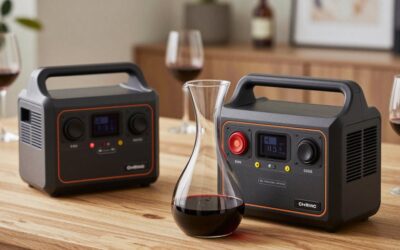
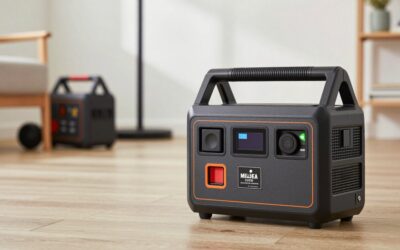
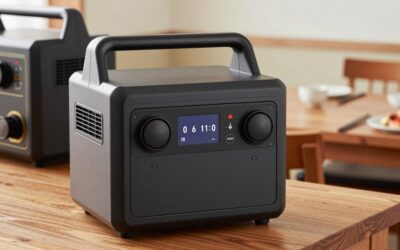
STARYLINE 1000W Portable Power Station 1024Wh LiFePO4 for Outdoor & Home
Included for 'Best Portable Power Station for RV Boondocking: Off-Grid Sizing Guide' as a relevant option in this category; details come from the product listing.
View on Amazon
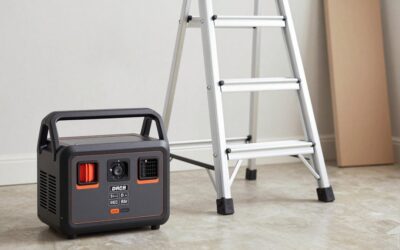
Jackery HomePower 3000 Portable Power Station, 3072Wh, 3600W AC Output
Included for 'Best Portable Power Station for RV Boondocking: Off-Grid Sizing Guide' because the listing specifies 3072Wh and 3600W AC Output, details this guide uses to compare options.
View on Amazon
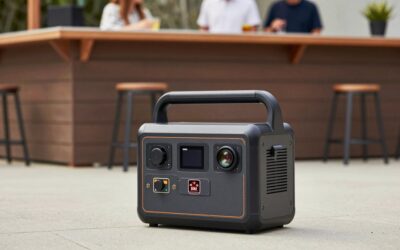
EBL 2400W Portable Power Station LiFePO4 Battery for Home Use
Included for 'Best Portable Power Station for RV Boondocking: Off-Grid Sizing Guide' as a relevant option in this category; details come from the product listing.
View on AmazonDaily energy planning
| Load | Daily energy |
|---|---|
| 12V compressor fridge | 0.4-0.8 kWh |
| Lights + water pump + fans | 0.2-0.5 kWh |
| Laptops, phones, tablets | 0.2-0.4 kWh |
| Microwave/coffee (bursts) | 0.3-0.6 kWh |
A typical boondocker uses 1-2 kWh per day, so a 2kWh station with 400W+ of solar can sustain most setups indefinitely in good sun.
Features that matter off-grid
Solar acceptance and MPPT
High solar input and an efficient MPPT charge controller are essential, they determine how fast you refill during daylight. Match your panel array’s voltage to the station’s input window for best results.
Inverter surge for appliances
If you want to run a microwave or induction cooktop in bursts, choose a 2000W+ inverter with strong surge. For an RV rooftop AC, you generally need a larger unit or an EcoFlow/Bluetti-style system with high output.
LiFePO4 and weight
LFP handles heat and daily cycling for years. Balance capacity against weight, since a station lives in your rig and every pound counts on the road.
How to choose
For weekend boondocking with light loads, a 1kWh unit and 200W of solar suffice. For extended off-grid living with appliance use, a 2-3kWh expandable station with 400-800W of solar is the practical target. Add capacity if you plan to run an air conditioner.
FAQ
Can a power station run my RV air conditioner off-grid?
Only larger units can. A rooftop AC surges to ~2800-3000W and draws 1300-1500W running, so you need a high-output station (often 2kWh+ with a strong inverter) and plenty of solar to sustain it beyond short bursts.
How much solar do I need for boondocking?
To sustain a typical 1-2 kWh daily budget, 400-800W of panels works well in good sun, refilling the station each day so you can stay off-grid indefinitely.
Energy discipline on the road
Successful boondocking is as much about managing consumption as storing energy. Switch to LED lighting, run a DC compressor fridge rather than an absorption unit, and charge devices from DC and USB-C to avoid inverter losses. These habits can cut your daily draw by a third, meaning a modest station and panel array sustain you far longer between sunny recharge days.
Matching panels to your rig
Rooftop panels charge hands-free while you explore, but portable folding panels let you park in shade and place panels in the sun, a real advantage in hot climates. Many boondockers use both: fixed panels for baseline charging and a portable array to chase the sun. Match total wattage to your daily kWh so the battery refills fully on a typical day.
Running an air conditioner off-grid
Air conditioning is the hardest boondocking load. Only larger stations with strong inverters can start a rooftop AC, and sustaining it drains capacity quickly, so a soft-start kit and a big solar array are near-mandatory if you truly need AC off-grid. Many boondockers instead rely on ventilation, shade, and 12V fans, reserving the battery for essentials.
Redundancy and reliability
Far from services, reliability matters. A portable station that also serves as home backup gives you a proven, warranty-backed power source you can carry between rig and house. Keep charging cables, a spare fuse, and a way to recharge from the vehicle, so a cloudy stretch never leaves you stranded without power.
Bottom line
For RV boondocking, size a LiFePO4 power station to your daily kWh, usually 2-3kWh, and pair it with 400-800W of solar and an MPPT controller. Prioritize solar acceptance and inverter surge, add capacity for air conditioning, and you will have flexible, quiet off-grid power that spares your house batteries.

Write Your Review
No reviews yet. Be the first to share your experience!