
🛒 Best Price Today on Amazon
Prime members get fast, free shipping on everything above, plus member-only deals. New members get a 30-day free trial — cancel anytime.
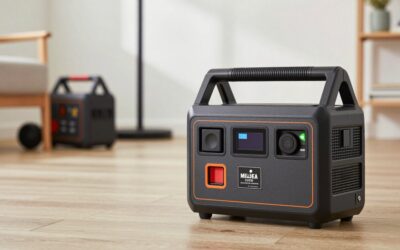
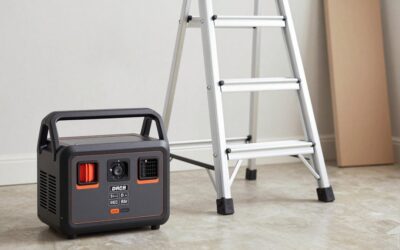
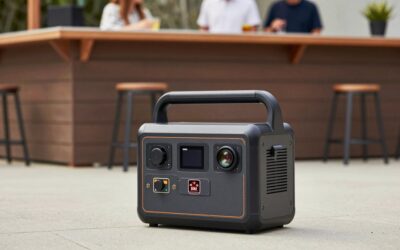
The Bluetti AC180 has become one of the most common mid-size power stations in home backup kits, and a refrigerator is usually the first thing owners want to plug into it. With roughly 1,152Wh of storage and a 1,800W inverter, it can start virtually any household fridge and run an efficient one for about a day. This guide shows how to measure your own fridge’s needs, how long the AC180 will last and how solar can keep it going through a longer outage.
AC180 in brief
These are class figures; confirm against Bluetti’s current spec sheet. The AC180 carries about 1,152Wh of LiFePO4 storage, 1,800W of continuous output and a Power Lifting mode around 2,700W for resistive loads only. It accepts roughly 500W of solar, fast AC charging in the 1,400W class and expansion batteries from Bluetti’s B80, B230 and B300 families. It weighs around 35 pounds. In some regions the AC180 has been replaced by newer versions such as the AC180P, so check which model you are actually buying.
Measure before you plan
Fridge labels and online estimates can be off by 50% or more. The easiest way to plan is to measure:
- Plug the fridge into a plug-in watt meter for 24 hours with normal use.
- Note the kWh reading; that is your daily energy.
- Check the peak watts; that estimates startup surge and defrost load.
- Optionally, plug the fridge into the AC180 while grid power is available and watch the app during compressor starts.
Most full-size fridges surge to 600 to 1,200W and run at 100 to 200W, well within the AC180’s 1,800W output.
How long it runs
Bluetti’s own runtime formula accounts for depth of discharge, inverter efficiency and the unit’s self-consumption. Using roughly 900 to 950Wh usable:
| Refrigerator | Daily use | AC180 alone | AC180 + B80-class (~806Wh) | AC180 + 400W solar (sunny day) |
|---|---|---|---|---|
| Efficient 18 cu ft | ~1.0 kWh | ~22 hours | ~1.6 days | indefinite |
| 22 cu ft bottom-freezer | ~1.4 kWh | ~16 hours | ~1.2 days | indefinite in good sun |
| 26 cu ft French-door | ~1.9 kWh | ~12 hours | ~21 hours | most of the day |
| Beverage fridge / mini fridge | ~0.5 kWh | ~1.9 days | ~3.3 days | indefinite |
A clear day with 400W of panels can produce roughly 1.6 to 2.4kWh, more than most fridges use, which is why solar changes the picture so dramatically.
Tips for a longer run
- Disable ice makers and door heaters (“energy saver” or “anti-sweat” settings).
- Keep the fridge full; water bottles add thermal mass.
- Set it around 37°F rather than colder.
- Open it only at mealtimes and grab everything at once.
Safety and placement
Keep the AC180 indoors, near the fridge but not against the warm condenser coils, on a hard surface with clear vents. LiFePO4 batteries should not be charged below freezing and age faster in heat. If you recharge from a gas generator, run the generator outdoors at least 20 feet from the house, never in a garage or on a porch, with exhaust away from doors and windows, and keep CO alarms working. Powering a fridge through the home’s wiring requires a transfer switch or interlock installed by a licensed electrician. Never backfeed an outlet with a double-male cord.
Planning a three-day fridge outage
Suppose your fridge uses 1.2kWh per day and you have the AC180 plus two 200W panels. Day one: the fridge runs from the battery, which drops to around 10 to 20% by the next morning. Day two: panels produce 1.6 to 2kWh in decent sun, covering the fridge’s daytime use and refilling the battery by late afternoon. Day three repeats. Cloudy days break the cycle, so switch the fridge to a rest schedule, running it for two hours and resting for two, whenever the battery drops below 40% in the evening. This approach keeps food safe without guesswork.
FAQ
Can the AC180 run a fridge and a microwave together?
Briefly. A fridge running at 150W plus a 1,000W microwave totals about 1,150W, within the 1,800W limit. Avoid starting the microwave at the moment the compressor kicks on.
Should I keep the fridge plugged into the AC180 as a UPS?
You can, but a battery constantly held at 100% ages faster. Setting a charge limit below full in the app, if available, is a reasonable compromise.
Bottom line
The Bluetti AC180 can start any typical refrigerator and run an efficient one for roughly 12 to 22 hours, with far longer coverage when paired with an expansion battery or a few hundred watts of solar. Measure your fridge first and you can plan outage coverage with confidence.




Write Your Review
No reviews yet. Be the first to share your experience!