
🛒 Best Price Today on Amazon
Prime members get fast, free shipping on everything above, plus member-only deals. New members get a 30-day free trial — cancel anytime.
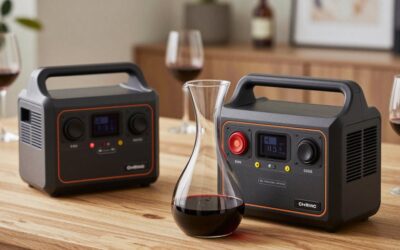
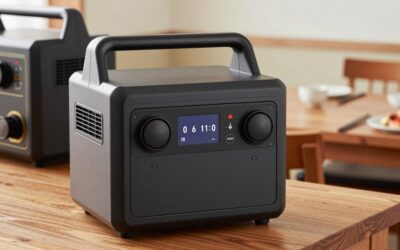
The EcoFlow Delta 3 Plus and Delta Pro 3 share a family name, an app and a LiFePO4 chemistry, but they are built for different jobs. The Delta 3 Plus is a portable, roughly 1kWh-class station you can lift into a car. The Delta Pro 3 is a wheeled, roughly 4kWh-class home-backup machine with 120/240V output. Choosing between them is less about which is better and more about whether you need portability or whole-circuit backup.
At a glance
The gap between these two is about four times the stored energy and a big jump in output and weight. Figures below are class-level ranges rather than lab measurements; exact capacity, output and weight vary by production batch and regional version, so confirm the current spec sheet before you order.
| Factor | Delta 3 Plus | Delta Pro 3 |
|---|---|---|
| Capacity class | ~1kWh, expandable with add-on packs | ~4kWh, expandable to much larger banks |
| AC output class | ~1,800W continuous (120V) | ~4,000W class with 120V and 240V |
| Weight class | ~25-30 lb, one-hand carry | ~100 lb, wheels and handle |
| Home integration | Plug-in loads, UPS mode | Transfer switch / home panel ready |
| Best fit | Camping, CPAP, short outages | Whole-circuit home backup, 240V tools |
Where the Delta 3 Plus wins
Portability
At roughly a quarter of the Delta Pro 3’s weight, the Delta 3 Plus goes camping, tailgating and to the job site without a second person. That alone decides it for many buyers.
Cost per trip
If your realistic outage is a few hours or a weekend trip, you are not paying for 3kWh of capacity that will sit idle most of the year. The entry price is a fraction of the Pro 3’s.
Room to grow
Add-on batteries let you extend the Delta 3 Plus later, which makes it a reasonable starting point if you are unsure how much capacity you really need.
Where the Delta Pro 3 wins
240V and big loads
Well pumps, some HVAC air handlers and larger tools need 240V. The Delta Pro 3 can supply it; the Delta 3 Plus cannot.
Real home backup
With a transfer switch or EcoFlow’s home panel, the Pro 3 can run selected circuits like the fridge, furnace blower, lights and internet for a day or more instead of powering individual extension cords.
Charging options
Higher solar input and multi-source charging mean it refills faster during multi-day outages, which is the scenario it is designed for.
Runtime math on real loads
Runtime is simply usable watt-hours divided by load watts. We assume about 85% of rated capacity reaches your devices after inverter losses, which is typical for LiFePO4 stations running AC loads. Note the sump pump and window AC rows: on the Delta 3 Plus they drain the pack in about an hour or two, which is the clearest illustration of why home backup buyers step up.
| Load | Draw | Delta 3 Plus (~1,024Wh class) | Delta Pro 3 (~4,096Wh class) |
|---|---|---|---|
| Refrigerator (avg) | 150W | ~5.8 h | ~23.2 h |
| Wi-Fi + laptop | 90W | ~9.7 h | ~38.7 h |
| Sump pump (running) | 800W | ~1.1 h | ~4.4 h |
| Window AC (small) | 550W | ~1.6 h | ~6.3 h |
| Microwave | 1,100W | ~0.8 h | ~3.2 h |
Price per watt-hour
Larger stations are usually cheaper per stored watt-hour. The Delta 3 Plus class often lands in the roughly $0.50-0.80 per Wh range at street prices, while 4kWh-class home units frequently come in lower per Wh when bundles and sales are factored in. The catch is the absolute outlay, which for the Pro 3 plus a transfer switch is several times higher.
Checklist before you order
- Your peak load: add up everything that will run at the same moment and keep it under about 80% of the continuous inverter rating of the Delta 3 Plus or Delta Pro 3.
- Your daily energy: multiply each device’s watts by its hours of use, total it, then divide by 0.85 to find the rated capacity you need.
- Surge: motors in fridges, pumps and compressors can briefly pull three to five times their running watts; check the surge rating, not only the continuous one.
- Recharge path: confirm wall-charge time, maximum solar input and whether car or generator charging is supported.
- Warranty and cycles: LiFePO4 units are typically rated for roughly 3,000+ cycles to 80% capacity; favour longer warranties and authorised sellers.
Which should you buy?
Buy the Delta 3 Plus if…
you want one station for camping, a CPAP, a home office and short outages, and you value being able to carry it. Add a battery later if you find yourself short.
Buy the Delta Pro 3 if…
your main goal is keeping a house running through storms or planned shutoffs, you need 240V, or you plan to connect to the home panel. It is a home appliance first and a portable second.
FAQ
Can the Delta 3 Plus run a refrigerator?
Yes. A typical fridge averages 100-200W with a start-up surge well within a 1,800W-class inverter, so a 1kWh-class pack runs it for roughly five to eight hours.
Do I need an electrician for the Delta Pro 3?
To plug devices straight into it, no. To feed home circuits through a transfer switch or home panel, yes, installation should be done by a licensed electrician to meet code.
Bottom line
Buy the Delta 3 Plus if portability and flexibility matter most; buy the Delta Pro 3 if you are really shopping for home backup. They overlap less than the names suggest, and choosing by use case rather than by spec sheet will save you money and a sore back.
Write Your Review
No reviews yet. Be the first to share your experience!