
🛒 Best Price Today on Amazon
Prime members get fast, free shipping on everything above, plus member-only deals. New members get a 30-day free trial — cancel anytime.
Warranty is where a lot of Harbor Freight generator buyers get surprised, and the surprise is usually in the same place: the machine will not start after sitting all winter, the owner assumes that is a defect, and Harbor Freight says a carburetor fouled by stale fuel is not a manufacturing defect. Both parties are being reasonable. The gap is that nobody explained what a generator warranty actually covers before the sale.
There is a second complication specific to Harbor Freight: the terms have changed repeatedly over the years and they differ by model. Predator generators have been sold at various points with the chain’s standard short-term guarantee, with longer manufacturer coverage, and with paid extended service plans offered at the register. So the only genuinely correct answer to “what is the warranty on my Predator” is the paperwork in the box and the terms shown on the product page for your specific item number. What follows is how the coverage is structured, what it does and does not include, and how to make a claim go smoothly.

Poweka New Ignition Coil Compatible with Harbor Freight Chicago Electric Storm CAT 63cc 2hp 800 900 Watts 60338 66619 69381 Generator
Included for 'Harbor freight generator warranty explained in 2026' as a representative home product in this roundup; selection reflects the product set returned for this topic.
View on Amazon
J2XCO 3200 4000 Watt Predator Generator AVR Voltage Regulator Harbor Freight 3500 3000 Watt Chicago Electric 2200 2400 3050 Watt Generator 56173 56174 56175 63079 68527 68528 69675 69676 69728 69729
Included for 'Harbor freight generator warranty explained in 2026' as a representative home product in this roundup; selection reflects the product set returned for this topic.
View on AmazonQuick Verdict
Three separate layers of coverage exist, and people conflate them. First, Harbor Freight’s retail satisfaction guarantee — a short return window during which you can bring the thing back for a refund or exchange, no argument needed. Second, the product warranty on the generator itself, which covers defects in materials and workmanship for a stated period that varies by model and has changed over the years. Third, the federally mandated emissions warranty that applies to emission-related engine components on small spark-ignition engines regardless of what the retailer’s own warranty says.
The most important practical advice: unbox, fuel, start and load-test the generator within the return window. Do not buy a machine in June for a hurricane in September and first start it in September. A defect found on day five is a no-questions refund; the same defect found on day two hundred is a warranty claim you have to argue.
The extended service plan is worth considering on inverter models specifically, because the inverter module is the one component that is genuinely expensive and genuinely not user-repairable. On a conventional open-frame machine where every likely failure is a twenty-dollar part, it is much harder to justify.
What the warranty will not cover, in any version: fuel-system damage from stale or contaminated gasoline, damage from running out of oil, normal wear items, overload damage, and anything that follows from running the machine improperly. Those exclusions are standard across the entire industry, not a Harbor Freight quirk.
What Is Covered, and by Which Layer
| Item or failure | Retail return window | Product warranty | Emissions warranty | Extended plan |
|---|---|---|---|---|
| Dead on arrival, will not start out of the box | Yes — refund or exchange | Yes | — | Yes |
| No electrical output, engine runs | Yes if within window | Yes | — | Yes |
| Inverter module failure | Yes if within window | Yes, if within term | — | Yes |
| AVR failure (conventional models) | Yes if within window | Yes, if within term | — | Yes |
| Carburetor defect (manufacturing) | Yes if within window | Yes | Typically yes | Yes |
| Carburetor fouled by stale fuel | Unlikely | No | No | Usually no |
| Engine seized from low oil | No | No | No | No |
| Ignition coil / spark plug wire defect | Yes if within window | Yes | Typically yes | Yes |
| Spark plug, air filter, oil | — | No — consumables | No | No |
| Electric-start battery | Yes if within window | Limited or excluded | — | Varies |
| Broken plastic wheels, cosmetic damage | Yes if within window | Usually no | — | Varies |
| Damage from overloading the generator | No | No | No | No |
How the Coverage Works
The return window is your real protection
Harbor Freight’s retail guarantee is the strongest and least complicated layer of protection you have, because it does not require anyone to adjudicate whether a failure is a defect. Within the window you bring the machine back and you get a refund or an exchange. That makes the window a testing period, and treating it that way is the single most valuable thing an owner can do. Add oil, add fuel, start it, run it for half an hour with a genuine load — a couple of space heaters and a shop vac will do — and check that every receptacle produces voltage. If anything is wrong, you are in the easiest possible position. Generators bought and shelved unopened for a hypothetical future outage waste this entirely.
The product warranty and why the term varies
Harbor Freight has used different warranty terms on Predator generators over the years and across models, ranging from the chain’s short standard coverage on some items to multi-year coverage on others. Do not rely on a figure quoted secondhand, including in forums where someone is describing a machine bought six years ago. The authoritative sources are the warranty card in the box, the statement printed on the carton, and the product page for your item number. Read the term and the exclusions, and note whether coverage is parts-only, parts-and-labor, or replacement-based. Replacement-based coverage from a retailer with stores in your metro area is worth more in practice than parts-and-labor coverage from a brand whose nearest service center is 200 miles away.
The emissions warranty most owners do not know they have
Federal EPA rules — and California’s CARB rules for units sold there — require manufacturers of small spark-ignition engines to warrant emission-related components for a defined period, separate from and in addition to the retailer’s own warranty. The parts covered are the ones that affect emissions: the carburetor and its internals, the fuel tank and lines on many units, the ignition system, the muffler and catalyst where fitted, and the air filter housing. This coverage exists independently of what the retail warranty says, and the details are printed in the emissions statement that ships with every compliant generator sold in the US. If a carburetor fails from a genuine manufacturing defect rather than from neglect, this is the provision worth citing.
The stale-fuel exclusion, explained rather than complained about
The most common Predator failure is a carburetor blocked by varnish from ethanol gasoline that sat in the float bowl for months. No manufacturer in the industry covers this, because it is not a defect — it is the predictable result of storing the machine with fuel in it. The relevant response is prevention, not argument: shut the fuel valve off and run the engine until it dies before every storage period so the bowl is empty, or use ethanol-free gasoline, or treat every tank with stabilizer and run it long enough to draw treated fuel through. If you have already lost that battle, a replacement carburetor for a Predator is an inexpensive part depending on model, which is less than the time you would spend on a warranty argument you will not win.
The terms people most often report
Because the existing guidance above says the terms vary, here is the pattern most owner manuals and independent comparisons describe for Predator generators. Always confirm against the paperwork for your own item number.
| Layer | Commonly reported term | What it covers |
|---|---|---|
| Retail product warranty | About 90 days from purchase | Defects in materials and workmanship for the original buyer |
| Emissions warranty | About 2 years | Emission-related parts such as carburetor, ignition, and fuel lines, when the engine has been maintained |
| Extended Service Protection | 1 or 2 years after the base warranty ends | Replacement or repair plan, bought separately |
| Premium-brand comparison | Often 3 years on all parts | Parts and labor through a dealer network |
The short base term is the reason the first-month load test described earlier matters so much. A problem that appears in month four is usually outside the product warranty, even though a few emission-related parts may still be covered.
How the extended protection plan works
According to the retailer’s program page, the plan must be purchased within 30 days of the product purchase and adds one or two years of coverage after the manufacturer’s warranty ends. It is described as having no deductible. Two plan styles exist: a replacement plan, which gives a new product, store credit, or a refund up to the original purchase price, and a repair plan that pays for parts and labor at a service center. If a repair takes longer than 15 days, or the product needs three service visits within twelve months, the program says it is replaced.
Practical points: keep the plan paperwork with the receipt, write down the contact line on the first day, and note that forum owners often report the plan allows one covered replacement, not unlimited claims. Read the brochure for your plan and ask at the counter what is excluded before you pay.
Claim checklist
- Locate the receipt, plan documents, and a photo of the data plate.
- Write down what happened, when it happened, and how many hours the engine had run.
- Keep the generator in its current state; do not disassemble the fuel system before the store sees it.
- Bring the generator or take clear photos of the failure to the store counter, or call the plan line for a repair plan.
- Ask for the outcome in writing, including whether the item is repaired or replaced.
Whether the extended service plan makes sense
Harbor Freight sells extended coverage at the register on many items. The math depends entirely on what failures are plausible and what they cost. On a conventional open-frame generator like the Predator 8750, nearly every realistic failure is a cheap part — a carburetor is a low-cost part, a plug is a few dollars, a wheel kit is also inexpensive — and the plan is hard to justify. On an inverter model, the inverter module is a genuinely expensive component, it is not something you fix with hand tools, and it is the part whose availability degrades fastest once a model leaves the catalog. If you are buying a Predator 3500, 5000 or 9500 inverter and you plan to keep it a long time, the plan is a more reasonable purchase than it is on the cheap machines.
What a claim actually requires
Keep three things: the receipt, the item number from the data plate, and the original carton if you have space for it. Photograph the data plate the day you buy the machine. Record the purchase date somewhere you will find it in three years. If you are an Inside Track Club member, your purchase history is in your account, which has rescued a lot of people who lost the paper. For an in-warranty failure, start at the store rather than with a parts order — replacement is often faster than repair, and a self-attempted repair with a third-party part can complicate a claim on the component you touched.
How this compares to the rest of the market
Premium brands compete on warranty length and dealer networks, and it is a real difference: a Honda generator is supported by dealers who will diagnose and repair under warranty with genuine parts. Mail-order value brands typically offer multi-year coverage administered by phone, which means shipping a 200-pound machine or waiting on a parts shipment. Harbor Freight’s advantage is physical: a store you can drive to, with a returns counter, in most US metro areas. Its disadvantage is that coverage terms have been less generous and less consistent than some competitors’. For a shipped comparison, machines like the Westinghouse 9500 Dual Fuel, the Champion 4000-Watt Dual Fuel RV Ready inverter and the WEN DF451i all carry manufacturer warranties administered remotely.
Related guides: best harbor freight generator for home backup, best predator generator for rv use, harbor freight generator parts availability, harbor freight generator sale schedule, harbor freight predator generator review
Protect your coverage: storage and maintenance routine
Most denied claims come from maintenance, not manufacturing. Keep a simple routine and a log, and your warranty position improves.
- Check the oil level before every start. Many engines shut down by themselves when oil is low, which is also a sign of neglect to a claims reviewer.
- Change the oil after the first break-in period (commonly 20 to 30 hours), then follow the manual, typically every 50 to 100 hours.
- Replace the air filter and inspect the spark plug at the intervals in the manual.
- Run the generator under load for about 20 to 30 minutes every month.
- Before storing for more than a month, add a stabilizer to the fuel, run the engine so treated fuel reaches the carburetor, or run the carburetor dry.
- Store it dry and covered, never covered while it is hot or running.
STA-BIL Storage Fuel Stabilizer, 32 Ounce

STA-BIL Storage Fuel Stabilizer, 32 oz | Treats 80 gallons. Keeps fuel fresh for up to 24 months during storage, helps protect against corrosion and ethanol damage
Included for 'Harbor freight generator warranty explained in 2026' as a representative home product in this roundup; selection reflects the product set returned for this topic.
View on AmazonSince stale fuel is the most common reason a claim fails, a fuel stabilizer is the most useful low-cost companion to a generator. This STA-BIL storage stabilizer is listed in a 32 ounce bottle that treats 80 gallons and keeps fuel fresh for up to 24 months of storage, according to the listing. It is designed to slow varnish and gum formation and to protect against ethanol-related problems in the fuel system.
How to use it: add it to the fuel tank before storage, then run the engine for several minutes so treated fuel reaches the carburetor. Do not treat already-spoiled fuel and expect a rescue; drain old fuel first. A stabilizer is not a replacement for running the carburetor dry or for using ethanol-free fuel when you can. It is also not a warranty guarantee; it simply removes the most common cause of denied claims.
Best for: owners who store the generator for months between uses. Skip if: you run the machine monthly with fresh fuel.
Kidde Portable Carbon Monoxide Detector, AA Battery Powered

Kidde Carbon Monoxide Detector, AA Battery-Powered, COB | LED Status Lights, Loud 85 db Alarm, Lightweight and Portable for Travel or Home, 5th Edition
Included for 'Harbor freight generator warranty explained in 2026' as a representative home product in this roundup; selection reflects the product set returned for this topic.
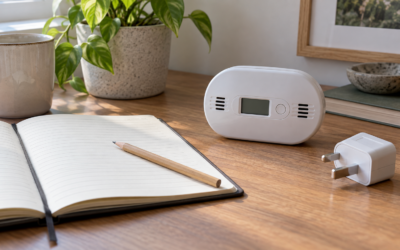
View on AmazonThe warranty never covers the real risk of a generator, which is carbon monoxide. The Kidde portable CO detector is listed as battery powered with LED status lights and a loud 85 decibel alarm, lightweight enough to carry. A battery-powered alarm keeps working when the power is out, which is when generators run.
Place it inside the home near sleeping areas while the generator runs outdoors. It does not replace the rule to keep the generator at least 20 feet from the building with exhaust pointed away from windows and doors. Test the alarm when you install it, replace the batteries on a schedule, and check the replacement date on the unit. Whether it carries a specific safety listing is not visible in the product title, so confirm it on the listing.
Best for: every household that runs a portable generator. Skip if: you already have a working, recently tested alarm on every level.
WEN Universal Weatherproof Generator Cover, Large

WEN 56310iC Universal Weatherproof Inverter Generator Cover, Large
Included for 'Harbor freight generator warranty explained in 2026' as a representative home product in this roundup; selection reflects the product set returned for this topic.
View on AmazonA cover keeps rain, dust, and debris off the engine while the generator is stored. The WEN 56310iC is listed as a universal weatherproof cover in a large size, made for inverter generators. It is a low-cost way to protect the controls, the recoil handle, and the air intake between uses.
Limits matter. The cover is intended for storage, not for use during operation, and a hot engine must cool fully before it goes on. A cover that traps moisture can cause rust, so make sure the machine is dry and leave a gap if the fabric allows airflow. Check the cover dimensions against your model before ordering, because an open-frame generator is larger than most inverter units.
Best for: outdoor shed or garage storage. Skip if: your generator already has a fitted cover.
FAQ
How long is the warranty on a Predator generator?
It depends on the model and the year it was sold, and Harbor Freight has changed the terms more than once. Check the warranty card in the box, the statement on the carton, and the product page for your item number — those are authoritative and a forum post about a different model is not. Separately, the federally required emissions warranty on emission-related components applies regardless.
Do I need my receipt?
Yes, or the equivalent. Keep the paper receipt, photograph it, and if you are an Inside Track Club member confirm the purchase appears in your account history. Proof of purchase date is the thing that determines whether you are inside a coverage window, and a data plate alone does not establish it.
My generator won’t start after a year in the shed. Is that covered?
Does using aftermarket parts void my warranty?
Installing a third-party part can complicate a claim relating to that component or to damage it caused. It does not automatically void everything. The practical rule is simple: while the machine is under coverage, let Harbor Freight handle repairs; once it is out of coverage, use the cheap aftermarket freely.
Does the warranty cover damage from running the generator indoors or backfeeding my panel?
No, and the more important point is that neither of those is a warranty question. Running a portable generator in a garage, shed, breezeway, basement, or under a deck fills the space with odorless carbon monoxide at lethal concentrations within minutes — always run it outdoors, at least 20 feet from the building, exhaust directed away from every window, door and vent. And never backfeed your home through a dryer or range outlet with a double-male cord: it bypasses your panel’s overcurrent protection, leaves live prongs exposed, and pushes lethal voltage back onto utility lines where crews may be working. Connect through a manual transfer switch or a listed interlock kit installed by a licensed electrician — options include the Reliance 31406CWK 30A 6-circuit, the Reliance 310C Pro/Tran2 10-circuit and the Connecticut Electric EmerGen 6-circuit kit.
Should I buy the extended plan on a Harbor Freight generator?
It makes the most sense on inverter models with costly electronics and when you plan to keep the generator for several years. On cheap open-frame models where likely repairs are inexpensive parts, many owners skip it.
What is the emissions warranty period for small engines?
It is commonly stated as two years for emission-related components, but the exact period and the parts listed are printed in the emissions statement that came with your generator.
Does a fuel stabilizer protect my warranty?
It does not guarantee a claim, but it reduces the chance of the stale-fuel failures that manufacturers exclude.
Where should the carbon monoxide detector go?
Put it inside the home near sleeping areas, and keep the generator outdoors far from windows and doors.
Write Your Review
No reviews yet. Be the first to share your experience!