
🛒 Best Price Today on Amazon
Prime members get fast, free shipping on everything above, plus member-only deals. New members get a 30-day free trial — cancel anytime.
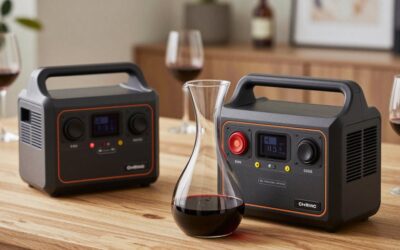
For CPAP users, a 1,000Wh portable power station is one of the most reassuring pieces of outage gear you can own. Most CPAP machines draw 30-60 watts without heated humidification, so a 1,000Wh station can often cover two to four full nights. Turn on the heated humidifier and heated tubing, though, and the same station may last only one night. This guide breaks down the numbers so you can plan with confidence. For settings changes, talk to your sleep physician or equipment supplier first. This is power guidance, not medical advice.
Nights per charge by configuration
| CPAP configuration (8-hour night) | Average draw | Energy per night | Nights via AC outlet (~850Wh usable) | Nights via DC cable (~920Wh usable) |
|---|---|---|---|---|
| CPAP, no humidifier, low-mid pressure | 30-40W | 240-320Wh | ~2.7-3.5 | ~2.9-3.8 |
| CPAP, no humidifier, higher pressure | 45-60W | 360-480Wh | ~1.8-2.4 | ~1.9-2.6 |
| CPAP + heated humidifier, low setting | 55-75W | 440-600Wh | ~1.4-1.9 | ~1.5-2.1 |
| CPAP + humidifier + heated tube | 80-110W | 640-880Wh | ~1.0-1.3 | ~1.0-1.4 |
| BiPAP / APAP at higher pressures | 40-70W | 320-560Wh | ~1.5-2.7 | ~1.6-2.9 |
Your machine’s power supply label shows its maximum rating (often 65-90W), which is higher than average use. Check your specific model’s manual or the manufacturer’s battery-use guidance for more precise figures.
Why DC can add a night
When you plug the CPAP’s normal power brick into the station’s AC outlet, energy goes from battery to AC inverter to power brick to machine. Each step loses a little. Many CPAP manufacturers sell DC power cords or converters that connect directly to a 12V or 24V output, skipping the inverter. That typically saves 10-15%. It also avoids the inverter’s idle draw, which can be 10-25W on its own, a meaningful amount against a 40W load over 8 hours. Use only DC accessories approved for your machine.
The humidifier decision
Heating water is what makes humidified CPAP expensive in energy terms. During an outage, options your clinician may approve include using the humidifier on a lower setting, using passive (unheated) humidification, or switching it off for a night or two. Dry mouth or congestion can follow, so don’t change therapy without guidance. Planning your backup around the configuration you actually use is the safer approach. If you need full humidification, size up to a larger station or plan daily recharging.
Recharging between nights
A single 100-200W solar panel harvesting 0.4-1.0 kWh on a sunny day can refill most of a night’s CPAP use. Recharging from a car while driving, or from a fuel generator in about an hour, also works. The generator must run outdoors, at least 20 feet from the home, with the exhaust pointed away from bedroom windows. Keep a CO alarm near every sleeping area. That matters most for someone who sleeps with a mask on and may not notice early symptoms.
Bedside setup tips
Keep the station within reach but ventilated
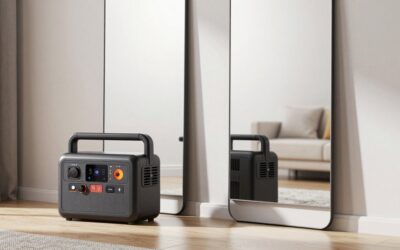
Place it on the floor or a nightstand with a few inches of clearance for its fan. Most stations are nearly silent at CPAP-level loads.
Switch off unused outputs
If you’re using DC, turn off the AC inverter to eliminate its idle draw.
Test before the storm
Run one full night on the station while the grid is up. You’ll learn your real consumption and the battery percentage left in the morning.
Battery care for medical backup
A power station reserved for CPAP backup should be ready at all times. LiFePO4 units hold charge well, typically losing only a few percent a month. Top up every 2-3 months, and after any use. Keep it indoors within its temperature range. Charging below freezing damages LiFePO4 cells unless the unit self-heats. Some people keep the station permanently plugged in. Check your manual, since some models support a UPS or pass-through mode designed for that.
FAQ
Can a 1,000Wh power station run a CPAP with a humidifier?
Yes, usually for about one night with full heated humidification and heated tubing, and about 1.5-2 nights on a low humidifier setting.
Is it safe to run a power station in the bedroom?
Yes. Battery stations produce no exhaust or carbon monoxide. Keep vents clear, don’t cover the unit, and use it within its rated temperature range.
Bottom line
A 1,000Wh station typically runs a CPAP for 2-4 nights without humidification, or about 1 night with full heated humidification. Use a manufacturer-approved DC cable for an extra margin. Test at home before you need it, and ask your clinician before changing humidifier settings.
Write Your Review
No reviews yet. Be the first to share your experience!