
🛒 Best Price Today on Amazon
Prime members get fast, free shipping on everything above, plus member-only deals. New members get a 30-day free trial — cancel anytime.
- Top Pick: Westinghouse 13500 Peak Watt Tri-Fuel Home Backup Portable Generator, Remote Electric Start, Transfer Switch Ready, Gas, Propane, and Natural Gas Powered
- Best Value: Westinghouse 14500 Peak Watt Dual Fuel Home Backup Portable Generator, Remote Electric Start, Transfer Switch Ready, Gas and Propane Powered
- Premium Choice: Westinghouse 4650 Peak Watt Portable Generator, RV Ready 30A Outlet, Gas Powered, CO Sensor
Choosing the right generator for a freezer is less about the freezer’s size than its compressor. A freezer may use only a few hundred watts while running, but the compressor can briefly require two to five times that amount when it starts. The generator must cover both the starting surge and the freezer’s continuous running load.
The Short Answer
Most household freezers need a generator with at least 1,500 to 2,000 running watts and 2,500 to 3,000 starting watts. For a modern, efficient chest freezer, a quiet 1,500-watt inverter generator may work if its running and surge ratings are sufficient. For a full-size upright freezer, an older appliance, or a freezer sharing power with other equipment, choose a 3,000- to 4,500-watt generator.
As an Amazon Associate we earn from qualifying purchases at no extra cost to you.


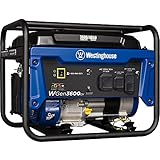

Typical freezer loads are:
- Small chest freezer: 80 to 150 running watts; approximately 500 to 1,000 starting watts
- Full-size chest freezer: 100 to 250 running watts; approximately 700 to 1,500 starting watts
- Upright freezer: 150 to 400 running watts; approximately 1,000 to 2,000 starting watts
- Older or heavily loaded compressor freezer: potentially 500 running watts or more, with a higher startup surge
Check the appliance label for amps or watts whenever possible. If the label lists amps, multiply amps by 120 volts to estimate running watts. For example, a freezer rated at 3 amps uses about 360 watts while running. The generator’s running-watt rating must cover that figure, while its peak- or starting-watt rating must cover the compressor’s brief startup demand.
Standard Sizes
Freezer capacity affects physical placement and often correlates with compressor size, but it does not determine wattage by itself. Use the measurements below as planning ranges rather than exact specifications. Models vary by brand, insulation thickness, hinge design, and whether the freezer is manual-defrost or frost-free.
| Freezer type | Typical capacity | Typical dimensions (W × D × H) | Approximate dimensions in centimeters | Typical running wattage | Recommended generator capacity |
|---|---|---|---|---|---|
| Compact chest freezer | 3.5–5 cu. ft. | 24–28 × 20–24 × 33–35 in. | 61–71 × 51–61 × 84–89 cm | 80–150 W | 1,500–2,000 starting W |
| Medium chest freezer | 7–10 cu. ft. | 34–42 × 22–27 × 33–36 in. | 86–107 × 56–69 × 84–91 cm | 100–220 W | 2,000–3,000 starting W |
| Large chest freezer | 14–18 cu. ft. | 48–60 × 24–30 × 33–37 in. | 122–152 × 61–76 × 84–94 cm | 150–300 W | 2,500–4,000 starting W |
| Apartment upright freezer | 5–8 cu. ft. | 22–25 × 24–27 × 55–60 in. | 56–64 × 61–69 × 140–152 cm | 150–300 W | 2,000–3,000 starting W |
| Full-size upright freezer | 15–21 cu. ft. | 28–33 × 29–32 × 65–71 in. | 71–84 × 74–81 × 165–180 cm | 200–400 W | 3,000–4,500 starting W |
These generator recommendations assume the freezer is the main load. Add the running watts of any refrigerator, sump pump, furnace blower, lights, or electronics that will operate at the same time. A freezer that needs 300 running watts can still overload a small generator if a 1,000-watt pump starts simultaneously.
How to Measure Your Space
- Measure the appliance body. Record the width, depth, and height at the widest and tallest points, including handles, hinges, and rear components.
- Measure the doorway. Check the clear opening with the door fully open. Compare it with the freezer’s narrowest orientation, and account for trim that may reduce the usable width.
- Mark the floor footprint. Use painter’s tape to outline the freezer’s width and depth. This shows whether doors, drawers, or nearby appliances can open fully.
- Add ventilation clearance. Follow the manufacturer’s instructions, but plan on several inches around the sides and back unless the manual specifies otherwise. Do not push a freezer tightly against a wall.
- Check the lid or door swing. A chest freezer needs overhead clearance for its lid. An upright freezer needs room for the door to open at least 90 degrees and for baskets or drawers to slide out.
- Inspect the floor. Confirm that the surface is level, dry, and strong enough for the appliance. A loaded freezer can weigh roughly 100 to 300 pounds, depending on size and contents.
- Plan the generator cable route. The generator must remain outdoors, far from doors, windows, and vents. Use a properly rated outdoor extension cord or a code-compliant transfer-switch installation rather than placing a generator indoors or in an attached garage.
By Room or Use Case
Garage freezer
A garage is a common location for a chest or upright freezer, but heat can increase compressor workload. In a warm garage, select the next generator size above the minimum and avoid sharing a small generator with power tools or a refrigerator. A 2,000- to 3,000-starting-watt unit is a practical target for one modern freezer.
Basement or utility room
Basements are often cooler and more stable, which helps the freezer run efficiently. The main concern is cord length and moisture. For one freezer, 1,500 to 2,500 starting watts may be enough, but a 3,000-watt class generator provides more headroom for lights, a router, or a small dehumidifier.
Outdoor freezer or shed
Measure the shed door and account for temperature extremes. Some freezers are not designed for unconditioned spaces, and very low temperatures can affect thermostat operation. If the unit is in a detached shed, never operate the generator inside the same structure. A transfer switch or exterior inlet installed by a qualified electrician is the safer long-term setup.
Whole-home backup
If the freezer is part of a broader emergency-power plan, calculate the freezer’s startup demand along with essential circuits. A portable generator in the 4,500-watt range may handle a freezer, refrigerator, several lights, and small electronics when loads are managed carefully. Larger home-backup models rated around 13,500 to 14,500 peak watts offer substantially more capacity, but fuel use, storage, noise, and installation requirements also increase.
For reference, current portable-generator pricing commonly ranges from about $300 to $400 for a compact 1,500- to 4,650-watt model, approximately $1,200 to $1,400 for a larger 13,500- to 14,500-peak-watt dual- or tri-fuel unit, and more for permanently installed systems. Compare running watts, not only the advertised peak number.
Common Sizing Mistakes
- Using running watts alone: A freezer may run at 250 watts but need 1,000 watts or more to start.
- Confusing peak watts with continuous watts: Peak power is temporary. The running-watt rating determines whether the generator can sustain the appliance.
- Ignoring simultaneous loads: Add every device that may start at the same time, especially pumps, refrigerators, and furnace motors.
- Buying the smallest generator without checking the label: A 1,500-watt unit can be adequate for some compact freezers but leaves little margin for an older compressor.
- Using an undersized extension cord: Long, light-duty cords can cause voltage drop and overheating. Use a short, outdoor-rated cord sized for the generator and load.
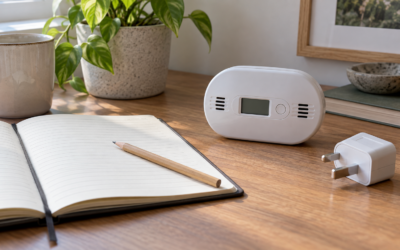
- Operating the generator in an unsafe location: Carbon monoxide can accumulate quickly. Run it outdoors only, follow clearance instructions, and use a carbon-monoxide alarm inside the home.
FAQ
Can a 1,000-watt generator run a freezer?
Sometimes, but it is not a dependable choice. A compact modern freezer may run within 1,000 watts, yet its compressor startup surge can exceed that rating. A generator with at least 1,500 running or peak watts, and a clearly stated surge rating, gives you a better chance of reliable starting.
Is 2,000 watts enough for a chest freezer?
Usually, yes, for one modern chest freezer. Confirm that the generator supplies enough starting watts and keep other high-demand appliances disconnected during startup. For a large or older chest freezer, choose a 2,500- to 3,000-watt starting capacity instead.
How long will a generator run a freezer?
Runtime depends on fuel tank size, generator efficiency, ambient temperature, and how often the compressor cycles. A freezer does not draw its maximum wattage continuously. Check the generator’s stated runtime at a partial load, and keep the freezer closed as much as possible during an outage.
Can I plug a freezer into a generator with an extension cord?
Yes, if the cord is outdoor-rated, properly sized, and within the generator and appliance manufacturers’ recommendations. Do not use a male-to-male “backfeed” cord. For a home’s permanent wiring, use a properly installed transfer switch or interlock system.
Top picks from this guide
 WestinghouseWestinghouse 13500 Peak Watt Tri-Fuel Home Backup Portable Generator, Remote…$1,249 \xc2\xb7 99/100
 WestinghouseWestinghouse 4650 Peak Watt Portable Generator, RV Ready 30A Outlet,…$349 \xc2\xb7 97/100
 WestinghouseWestinghouse 14500 Peak Watt Dual Fuel Home Backup Portable Generator,…$1,349 \xc2\xb7 97/100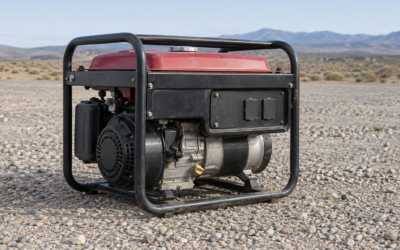
Write Your Review
No reviews yet. Be the first to share your experience!