
🛒 Best Price Today on Amazon
Prime members get fast, free shipping on everything above, plus member-only deals. New members get a 30-day free trial — cancel anytime.
- Step 1: Pick a capacity that fits apartment life
- Step 2: Match the solar input to balcony panels
- Step 3: Choose panels that suit a railing
- Step 4: Battery chemistry for indoor living
- Step 5: Features that matter in a small space
- Step 6: Mind the lease and building rules
- Step 7: Budget reality
- FAQ
- Bottom line
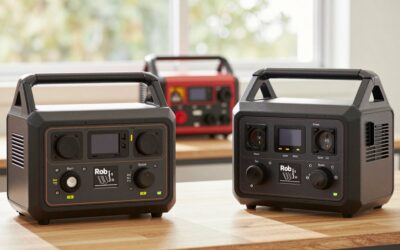
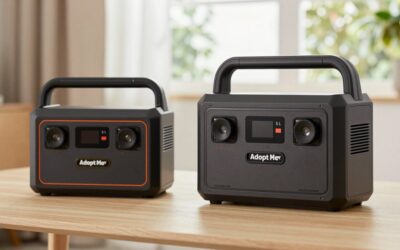
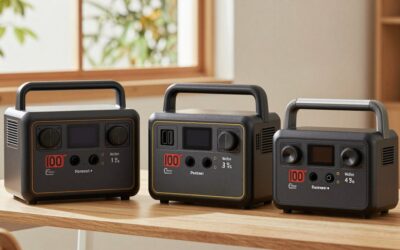
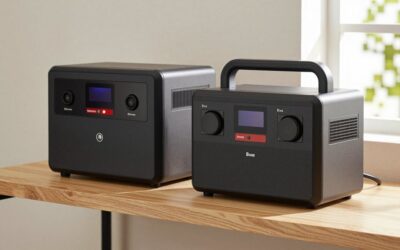
When people search for a generator for a balcony solar setup, what they almost always need is a “solar generator,” the marketing name for a portable power station charged by solar panels. Fuel-burning generators are typically prohibited on apartment balconies and inside multifamily units because of carbon monoxide and fire risks, so this guide focuses on choosing the battery-based kind: how big it should be, which specifications matter for small, partly shaded panels, and which features make it livable indoors.
Step 1: Pick a capacity that fits apartment life
Apartments have smaller loads and less space than houses. Start with what you want to keep running during an outage or power with sunshine on a normal day.
| Apartment goal | Daily energy | Suggested capacity |
|---|---|---|
| Phones, router, lights for an outage | 150–400Wh | 300–500Wh |
| Remote work: laptop, monitor, router | 500–1,000Wh | 1,000Wh |
| Work plus fan and mini fridge | 1,000–1,800Wh | 1,500–2,000Wh |
| CPAP plus essentials for two nights | 800–1,500Wh | 1,000–2,000Wh |
For most renters, 1,000Wh is the sweet spot: enough for a workday or a night-and-day outage, and still light enough to carry, usually 22 to 30 lb.
Step 2: Match the solar input to balcony panels
Balcony panels spend much of the day in partial sun, so the station’s charge controller matters.
Voltage window
Check the solar input voltage range, often something like 12 to 60V or 11 to 150V. Balcony setups usually use one or two panels. A station with a low minimum voltage, around 11 or 12V, keeps charging in weak morning and evening light, which is valuable on east- or west-facing balconies.
Input wattage
Balconies rarely fit more than 200 to 400W of panels. A station with 200 to 500W of solar input is plenty; paying for 1,000W-plus input capability adds little value on a railing.
MPPT controller
Nearly all modern stations use MPPT controllers, which extract more power from partly shaded panels than older PWM designs. Confirm it, especially for smaller or older models.
Step 3: Choose panels that suit a railing
| Panel type | Weight per 100W | Balcony pros | Balcony cons |
|---|---|---|---|
| Folding portable panel | 9–12 lb | Easy to set out and bring in | Kickstands need floor space; wind risk |
| Rigid panel on railing mount | 13–17 lb | Durable, better heat handling | Heavier; mounting rules may apply |
| Flexible panel | 4–6 lb | Light, can hang on railing | Runs hotter, shorter lifespan |
Secure any panel with straps rated for wind loads. A panel that falls from an upper floor is a serious hazard to people below.
Step 4: Battery chemistry for indoor living
Stations using LiFePO4 (lithium iron phosphate) cells are widely regarded as thermally more stable than other lithium chemistries, and typically offer around 3,000 or more charge cycles to about 70 to 80 percent capacity. For a device that lives in your bedroom or living room and cycles often, LiFePO4 is the preferred choice.
Step 5: Features that matter in a small space
- Quiet cooling fans; some stations are noticeably loud when charging fast.
- UPS or EPS mode so your router and desktop stay up when power blinks.
- App or display showing solar input watts, useful for finding the best panel angle.
- Pure sine wave AC output rated at least 1,000 to 1,800W for laptops, fans, and small appliances.
- Enough USB-C PD ports, ideally 60 to 100W, so laptops charge without the AC inverter.
Step 6: Mind the lease and building rules
Before mounting anything, check the lease for balcony attachments, drilling, and visible equipment. Freestanding or clamp-on mounts that do not drill into the structure are usually the safest bet. Run cables through a window or door gap using a flat cable pass-through so windows still close and no one trips.
Step 7: Budget reality
A 1,000Wh LiFePO4 station often falls in a broad range of roughly $400 to $900 depending on features and sales, and a 200W folding panel typically adds $150 to $400. Compare cost per watt-hour and cycle life rather than headline capacity alone.
FAQ
Can I use a gas generator on my apartment balcony?
Generally no. Fire codes, building rules, and leases commonly prohibit fuel-burning generators and fuel storage on balconies in multifamily housing because of carbon monoxide and fire risk. Use a battery-based solar generator instead.
What size solar generator is best for an apartment?
For most renters, a 1,000Wh station with 200W of balcony panels works well. Choose 500Wh for phone-and-router backup, or 1,500 to 2,000Wh for remote work plus a fridge or CPAP.
Bottom line
For a balcony setup, choose a battery-based solar generator: usually a 1,000Wh LiFePO4 station with a wide, low-starting solar voltage window, 200 to 500W of solar input, UPS mode, and quiet fans. Pair it with 200 to 400W of securely mounted panels, and check your lease before attaching anything to the railing.

Write Your Review
No reviews yet. Be the first to share your experience!