
🛒 Best Price Today on Amazon
Prime members get fast, free shipping on everything above, plus member-only deals. New members get a 30-day free trial — cancel anytime.
The Short Answer
Is generator extended warranty worth it? Usually, no—but it can make sense if you own an expensive inverter generator, expect frequent use, and the plan covers the specific failures most likely to be costly. For a basic portable generator costing $400 to $900, an extended warranty often adds more expense than value. For a $1,500 to $3,000 standby or premium inverter model, extra coverage may be reasonable if the contract is clear, the deductible is low, and repairs are available locally.
The decision is less about the warranty label and more about the math. Compare the plan price, service fees, exclusions, and expected repair cost with the generator’s replacement price. Also remember that many generator problems come from stale fuel, overloaded circuits, moisture, poor storage, or skipped maintenance—issues that extended warranties commonly exclude.
As an Amazon Associate we earn from qualifying purchases at no extra cost to you.

What You Actually Get
A generator extended warranty is usually a service contract that begins after the original manufacturer’s warranty ends. Coverage commonly lasts one to five additional years, although the exact term may be measured from the purchase date rather than the day factory coverage expires.
Depending on the provider, the contract may cover parts and labor for mechanical or electrical breakdowns, such as a failed alternator, inverter module, starter motor, control board, or engine component. Some plans offer repair, replacement, reimbursement, or a cash settlement when a covered generator cannot be fixed. A few include pickup and shipping, which matters because a portable generator can weigh 40 to 100 pounds, while a larger standby unit may require professional removal.
What you generally do not get is protection from every way a generator can stop working. Common exclusions include:
- Damage caused by incorrect fuel, contaminated fuel, old gasoline, or ethanol-related buildup
- Failure to perform oil changes, air-filter service, spark-plug replacement, or other scheduled maintenance
- Overloading the generator or connecting it improperly to a home electrical system
- Water intrusion, rust, freezing, rodents, theft, cosmetic damage, and storm-related damage
- Wear items such as spark plugs, belts, filters, recoil starters, batteries, and sometimes carburetors
- Commercial or rental use when the contract is limited to residential use
Read the contract for three details before paying: the claim process, the maximum payout, and who chooses the repair facility. A $0 deductible sounds attractive, but it does not help if the provider can substitute refurbished parts, limit transportation coverage, or declare the unit a total loss at a low threshold.
Pros
- Protection from expensive electronics. Inverter generators use control boards and inverter modules that can cost several hundred dollars before labor. On a unit with a $1,000 or higher replacement price, one major covered failure can justify the contract.
- More predictable ownership costs. A service plan can turn an uncertain repair bill into a known upfront expense, which is useful for emergency-preparedness budgets and households that cannot easily replace a generator after a storm.
- Useful for frequent operation. If you run a generator monthly, use it for work, or rely on it during repeated outages, the engine and electrical system receive more operating hours than a unit kept for occasional emergencies.
- Potential labor savings. Diagnosis and shop labor can quickly add $100 to $300 or more, depending on the repair and location. Coverage is more valuable when labor is included without a low hourly cap.
- Convenience for complex standby systems. A permanently installed 7,000- to 26,000-watt standby generator is not a simple do-it-yourself repair. A contract that includes authorized service may reduce logistical headaches.
Cons
- The premium may approach the repair risk. Extended coverage often costs roughly $80 to $400 for portable models and $300 to $1,200 or more for larger standby systems, depending on price and term. A $250 plan on a $600 generator is difficult to justify.
- Maintenance records may be required. Keep receipts, dates, oil type, and operating hours when possible. A claim can be denied if the provider says the failure resulted from missed maintenance.
- Many common problems are excluded. Starting trouble caused by old fuel, a clogged carburetor, a dead battery, or a fouled spark plug may be the issue you encounter most often—and not covered.
- Claims can take time. During a widespread outage, repair shops may be booked for days or weeks. A warranty does not guarantee immediate service or a temporary replacement generator.
- Coverage can be difficult to transfer. Some contracts follow the generator; others follow the original purchaser or require a transfer fee. This can reduce resale value and complicate a used purchase.
- Replacement terms may be less generous than expected. The provider may repair the unit repeatedly, use equivalent parts, or pay only the generator’s depreciated value rather than providing a new model.
Who Should Buy It
Consider an extended warranty if you meet most of these conditions:
- Your generator costs at least about $1,000, or replacing it would create a serious financial problem.
- You use it frequently, operate it for long periods, or depend on it for medical equipment, a well pump, heating controls, refrigeration, or home-office equipment.
- The manufacturer’s warranty is short, parts are difficult to source, or qualified repair shops are far away.
- The plan costs no more than about 10% to 20% of the generator’s purchase price for a portable model, or the contract provides substantial service value for a standby system.
- It includes parts and labor, has a reasonable deductible of $0 to $100, and clearly covers the engine, alternator, inverter, control board, and starting system.
For a standby generator, also ask whether annual inspections, transfer-switch components, installation wiring, and emergency service are included. These are often separate from the generator’s basic mechanical coverage.
Who Should Skip It
Skip the plan when you own an inexpensive portable generator, use it only a few hours per year, or could comfortably replace it with savings. A $500 conventional generator may be easier to replace than to repair, particularly if a carburetor, control module, or labor-heavy diagnosis is excluded.
You should also skip it if the warranty has a long list of exclusions, requires you to ship a heavy unit at your expense, has a payout cap close to the generator’s current value, or comes from a provider with no clear repair network. If the plan is offered at checkout under pressure, take time to compare the contract with the manufacturer’s existing coverage.
Cheaper Alternatives
| Option | Cost | Trade-off |
|---|---|---|
| Self-insurance repair fund | $10 to $30 per month | You keep the money and can use it for any repair, but you absorb a large early failure. |
| Manufacturer maintenance kit and scheduled service | About $25 to $100 per service | Reduces preventable failures but does not cover accidental or electronic breakdowns. |
| Fuel stabilizer and proper storage | About $8 to $20 per year | Helps prevent stale-fuel problems; it cannot protect against major engine or inverter failure. |
| Extended-run fuel kit | About $110 to $150 | Can reduce refueling during long outages, but it is not a warranty and may affect coverage if installed incorrectly. |
| Portable replacement fund | Save the generator’s cost over time | Provides flexibility, but you may have no backup while saving or during a sudden failure. |
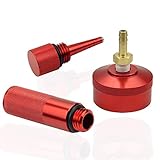
Maintenance is often the best first investment. Change oil according to the manual, run the generator under load periodically, store gasoline correctly, and keep the unit dry and ventilated. An extended-run setup may be practical for long outages, but compatibility matters. For example, the HND1.2CD dual-system fuel kit is listed for under $150 and is designed for several small generators, including Honda EU1000i, EU2000i, and EU2200i models, but it is sold without a fuel tank. A compatible gas cap, fitting, or dipstick accessory may cost less; the Mekar aluminum fitting, funnel, and magnetic oil dipstick is listed for under $20. These products address runtime or maintenance convenience, not breakdown coverage, and installation should follow the generator manufacturer’s instructions.
FAQ
Does an extended warranty cover a generator battery?
Often not. Batteries, spark plugs, filters, and other maintenance or wear items are commonly excluded or covered only for a short period. Check whether the starting battery is listed as a covered component and whether the plan excludes batteries after the first year.
Is a generator extended warranty better than homeowners insurance?
They cover different risks. Homeowners insurance may address theft, fire, or certain storm damage, usually subject to a deductible and policy limits. A service contract is intended for mechanical or electrical breakdowns. Neither should be assumed to cover fuel contamination, neglect, or improper installation.
Can I buy an extended warranty later?
Sometimes. Some providers require purchase at checkout or within 30 to 90 days, while others allow enrollment during the original warranty period or after an inspection. Waiting may result in a higher price, a shorter term, or a pre-existing-condition exclusion.
What is the best way to decide?
Get the total contract price, add the deductible, and compare that amount with a realistic major repair cost and the generator’s replacement price. If the plan costs $300 on a $700 generator and excludes fuel, carburetor, battery, and wear-related problems, skip it. If it costs $400 on a $2,000 inverter generator, covers major electrical and engine components, includes labor, and gives you dependable local service, it may be worthwhile.
Write Your Review
No reviews yet. Be the first to share your experience!