
🛒 Best Price Today on Amazon
Prime members get fast, free shipping on everything above, plus member-only deals. New members get a 30-day free trial — cancel anytime.
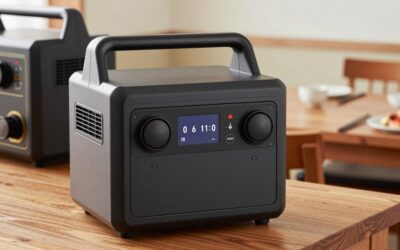
The HomePower name suggests a basement, but one detail on the Jackery HomePower 3000 speaks directly to RV owners: it has a 30A RV outlet built in. That means a 30-amp travel trailer can plug its shore cord straight into the station and run the coach’s own panel, with no adapters. Add roughly 3 kWh of storage in a 60-pound package, and it becomes an interesting middle ground between small camping stations and heavy whole-home batteries.
Key specs through a camper’s eyes
Jackery lists about 3,072 Wh of LiFePO4 capacity, around 3,600 W of 120V continuous output with a higher short surge, a TT-30 RV receptacle and a weight close to 60 pounds. It cannot be expanded with extra batteries. Solar input figures differ across listings, so check the current spec sheet for voltage and wattage limits before buying panels.
Why 3,600 W suits a 30A rig
A 30A RV circuit is limited to about 3,600 W at 120V. The HomePower 3000’s output matches that ceiling, so anything your trailer can run on campground power it can run here, just for a limited time.
Daily energy budget for a 30A trailer
| Item | Watts | Hours/day | Wh/day |
|---|---|---|---|
| 12V converter overhead and parasitic loads | 20–40 | 24 | 480–960 |
| LED lights | 30 | 5 | 150 |
| Water pump | 60 | 1 | 60 |
| Absorption fridge on electric (or 12V compressor fridge) | 300 (or 45 avg) | 24 cycling | 2,000–3,500 (or about 1,000) |
| Laptop, TV, phone charging | 80 | 4 | 320 |
| Furnace blower on cold nights | 40–90 | 6 | 240–540 |
Two lessons fall out of this table. First, never run an absorption fridge on electric from a battery; switch it to propane and save up to two-thirds of your capacity. Second, powering the trailer through the shore cord means the coach converter is also charging the house battery and burning a steady overhead, so turn it off if you have a good 12V house battery, or accept that loss.
How many nights can you stay out?
With about 2,600 to 2,800 Wh usable, a trailer running its fridge on propane and drawing 1,000 to 1,500 Wh per day gets two to three nights with no recharging. With 400 W of portable solar in good sun adding 1,200 to 1,800 Wh daily, that becomes an open-ended stay for moderate use. Rooftop AC is the exception: a 13,500 BTU unit drawing 1,300 W or more will take a full charge in two hours or so.
Where to put it
Keep it inside the trailer or a lockable bay, out of rain and direct sun. It produces no fumes, so indoor placement is safe, but give it a few inches of airflow around the vents. Secure it with straps for travel; 60 pounds sliding into a cabinet door at highway speed does real damage.
Compared with an inverter generator
A 2,200 to 3,000 W inverter generator is cheaper, lighter and refuels in minutes. It is also loud by quiet-hours standards and must be placed at least 20 feet from any RV, with exhaust pointed away from windows, vents and awnings; exhaust can drift into your own rig or a neighbor’s, so keep a working CO alarm inside the coach. The HomePower 3000’s advantage is silence and zero emissions. Pairing both is common: generator for a daytime top-up, battery for nights.
Weaknesses to consider
- Not expandable, so capacity is fixed for the life of the unit.
- Only one 30A outlet, which is fine for 30A rigs but needs an adapter for 50A coaches (and then you are still capped near 3,600 W).
- Cold camping: LiFePO4 generally won’t charge near or below freezing, so keep it inside the heated cabin in shoulder seasons.
A weekend test before the real trip
Before relying on it in the desert, run a driveway test. Plug the trailer into the station on a Friday evening, live normally until Sunday and note the battery percentage every morning. Two nights of real data will tell you more than any spec sheet about your converter overhead, your fridge habits and how much solar you actually need to carry.
FAQ
Can I leave the RV plugged into it while driving?
It is better not to. Secure the unit, unplug the shore cord and let the tow vehicle or house battery handle 12V needs on the road.
Will it run my microwave?
Yes. A 1,000 W microwave draws around 1,400 to 1,600 W from the wall, well within the output rating, though ten minutes of use costs about 250 Wh.
Bottom line
For 30A travel trailers and small fifth-wheels, the Jackery HomePower 3000 is a good boondocking battery thanks to its built-in RV outlet, reasonable weight and 3 kWh of storage. Run the fridge on propane, add a few hundred watts of solar and it handles quiet off-grid weekends well. If you need all-day air conditioning or 50A service, look at larger expandable systems.





Write Your Review
No reviews yet. Be the first to share your experience!