
🛒 Best Price Today on Amazon
Prime members get fast, free shipping on everything above, plus member-only deals. New members get a 30-day free trial — cancel anytime.
- Top Pick: 2 Pcs 1/2" Thread Air Compressor Silencer Filter, 20mm Metal Noise Muffler, Intake Filter Replacement for Generators, Blowers, Exhaust Ports, Air Compressor Parts
- Best Value: MICRO-AIR EasyStart Flex 398 Soft Start Kit for Home & RV Air Conditioner
- Premium Choice: SoftStart Home – Soft Starter for Air Conditioners & Heat Pumps, Reduces Startup Power by 70%, Works with Generators, RVs & Solar, Extends Compressor Life–Up to 6 Tons (72,000 BTUs) 15 Minute Install
Choosing the right generator for central air is less about the air conditioner’s cooling capacity and more about its running wattage, startup demand, and the other appliances you want to operate at the same time. A typical 3-ton central air conditioner may run on roughly 3,500 to 5,000 watts but briefly require 8,000 to 15,000 starting watts unless it has a soft-start system.
Use the air conditioner’s nameplate, not a guess based only on tons or square footage. The safest choice is a generator with enough continuous wattage for the running load and enough surge capacity for compressor startup. For many homes, that means a 12,000- to 15,000-watt portable generator or a 14,000- to 22,000-watt standby generator.
As an Amazon Associate we earn from qualifying purchases at no extra cost to you.


The Short Answer
For central air, select a generator based on the following general ranges:
- 1.5- to 2-ton system: 8,000 to 12,000 starting watts and at least 5,000 to 7,000 running watts.
- 2.5- to 3-ton system: 10,000 to 15,000 starting watts and at least 6,000 to 8,000 running watts.
- 3.5- to 4-ton system: 12,000 to 18,000 starting watts and at least 7,000 to 10,000 running watts.
- 5-ton system: 15,000 to 25,000 starting watts and at least 9,000 to 12,000 running watts.
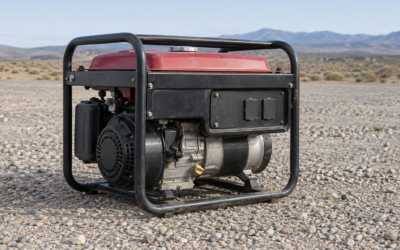
These figures assume a conventional compressor and do not include refrigerators, well pumps, electric water heaters, ovens, sump pumps, or other large loads. Add those appliances before choosing a final generator size. A whole-house standby generator is often easier to size because it automatically manages the load, while a portable generator may require you to turn off selected circuits.
For a typical 2,000-square-foot home with a 3-ton air conditioner, refrigerator, lights, internet equipment, and a gas furnace blower, a 12,000- to 15,000-watt generator is a practical starting point. If the home uses electric heat, an electric range, or a large well pump, the required capacity can increase substantially.
Standard Sizes
The table below shows common generator classes, approximate physical dimensions, weights, and the central-air sizes they may support. Actual measurements vary by brand, fuel type, enclosure, and included wheels or handles.
| Generator class | Typical output | Approx. dimensions | Approx. weight | Central-air suitability |
|---|---|---|---|---|
| Compact inverter | 2,000-4,000 running watts | 24-28 × 14-18 × 19-24 in (61-71 × 36-46 × 48-61 cm) |
45-100 lb (20-45 kg) |
Usually too small for central air |
| Mid-size portable | 4,000-7,000 running watts | 26-32 × 20-26 × 22-28 in (66-81 × 51-66 × 56-71 cm) |
120-200 lb (54-91 kg) |
May run a small, efficient system with reduced startup demand |
| Large portable | 7,000-12,000 running watts | 30-38 × 24-30 × 26-32 in (76-97 × 61-76 × 66-81 cm) |
180-300 lb (82-136 kg) |
Common choice for 2- to 4-ton systems |
| Portable heavy-duty | 12,000-18,000 running watts | 38-48 × 28-34 × 30-38 in (97-122 × 71-86 × 76-97 cm) |
250-400 lb (113-181 kg) |
Suitable for larger systems and additional household loads |
| Standby generator | 14,000-26,000 running watts | 48-56 × 25- thirty-one × 29-38 in (122-142 × 64-79 × 74-97 cm) |
400-700 lb (181-318 kg) |
Best for whole-home automatic backup |
The “thirty-one” entry above represents 31 inches; check the manufacturer’s exact cabinet dimensions before installation. Standby units also need clearance around the enclosure and must meet local gas, electrical, and fire-code requirements. Never place a portable generator in a garage, basement, enclosed porch, or near doors and windows.
How to Measure Your Space
- Find the air conditioner nameplate. Look on the outdoor condenser for model information, rated volts, maximum fuse or breaker size, RLA, and LRA. RLA is the running-load rating; LRA is the locked-rotor, or startup, rating.
- Record the voltage and amperage. Most residential central-air systems use 208/230 volts and a dedicated two-pole circuit. Do not connect a generator to this circuit without a properly installed transfer switch or approved interlock.
- Calculate approximate running watts. Multiply volts by amps. For example, 230 volts multiplied by 18 running amps equals about 4,140 watts. Use the manufacturer’s listed ratings when available rather than estimating.
- Account for starting watts. A compressor may need two to four times its running power for a moment. If the nameplate lists 70 LRA at 230 volts, the theoretical locked-rotor demand is about 16,100 volt-amperes. A licensed electrician can determine how much generator surge capacity is appropriate.
- List simultaneous loads. Add the refrigerator, freezer, furnace blower, sump pump, well pump, lighting, security system, and internet equipment. Exclude loads you will intentionally leave off, such as an electric dryer or water heater.
- Measure the generator location. Leave room for wheel movement, fueling, exhaust direction, maintenance access, and the manufacturer’s required clearance. A generator that is 32 inches wide may need a significantly larger operating footprint.
By Room or Use Case
Small home or apartment with a 1.5- to 2-ton system
A smaller central-air system may work with a 7,000- to 10,000-watt generator if the compressor has a low starting demand and other high-draw appliances remain off. A soft starter can make startup more manageable by reducing the initial compressor surge. Products such as the MICRO-AIR EasyStart Flex 398 and SoftStart Home are commonly priced around $350 to $400, but compatibility should be confirmed by an HVAC professional.
Average single-family home with a 2.5- to 3-ton system
A 12,000- to 15,000-watt portable generator is often the most balanced choice. It can support central air plus essential circuits, provided electric cooking, water heating, and clothes drying are not running at the same time. Expect large dual-fuel or gasoline models in this category to weigh roughly 200 to 300 pounds and cost approximately $1,000 to $3,000.
Large home with a 3.5- to 5-ton system
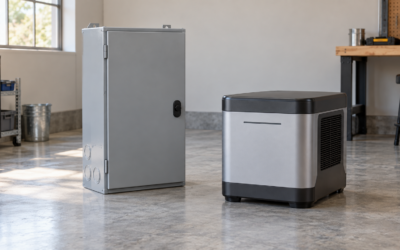
Choose a 15,000- to 22,000-watt generator when the home has a large compressor, multiple refrigerators, a well pump, or substantial lighting and electronics. A standby system may be more convenient because it starts automatically and can use load management. Installed standby systems commonly range from about $5,000 to $15,000, including professional installation, though local electrical and fuel work can change the total.
Home with a soft-start kit
A soft-start kit can reduce compressor startup demand, allowing some homes to use a smaller generator. It does not reduce the air conditioner’s normal running watts, however. A 3-ton unit that runs at approximately 4,000 watts still needs about 4,000 watts while cooling. Budget roughly $300 to $500 for a quality soft-start kit before installation.
Noise-sensitive installation
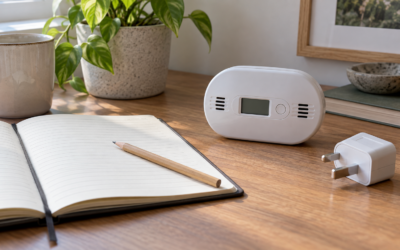
Generator mufflers and intake accessories may reduce sound, but they do not make an indoor installation safe. Small replacement air filters or compressor silencer accessories may cost about $9 to $30, while a quieter inverter generator can cost considerably more. Keep the generator outdoors, pointed away from the home, and use a carbon-monoxide alarm inside.
Common Sizing Mistakes
- Using only the air conditioner’s tonnage. Two 3-ton systems can have very different startup requirements.
- Shopping by peak watts alone. Continuous or running watts determine whether the generator can sustain the load.
- Ignoring motor startup. Compressors, pumps, and furnace blowers all draw extra power when starting.
- Adding every appliance. Decide which loads must operate together and calculate that realistic combination.
- Connecting through a household outlet. Backfeeding can injure utility workers and damage equipment. Use a transfer switch installed by a qualified electrician.
- Forgetting fuel capacity. A high-output generator may consume several gallons of gasoline or propane over a long outage.
- Placing the unit too close to the house. Follow the manual and local code for exhaust, clearance, grounding, and weather protection.
FAQ
Can a 5,000-watt generator run central air?
It may run a very small, efficient system with low startup demand, but most conventional central-air compressors need more surge capacity. A 5,000-watt unit is generally better suited to refrigerators, lights, fans, and selected essential circuits unless a compatible soft-start system has been installed.
What size generator runs a 3-ton air conditioner?
Plan on at least 6,000 to 8,000 running watts and approximately 10,000 to 15,000 starting watts for a typical 3-ton system. Confirm the condenser’s nameplate ratings because newer variable-speed equipment may have different requirements.
Will a soft starter let me use a smaller generator?
Often, yes. A soft starter reduces the compressor’s startup surge, but it does not eliminate the need for adequate running watts. Have the kit matched to the condenser and installed according to its instructions.
Can I run central air and an electric water heater together?
Usually not on a modest portable generator. An electric water heater can draw about 3,000 to 5,500 watts by itself, in addition to the air conditioner’s running and startup demand. A larger standby generator with load management is a safer option for both loads.
Write Your Review
No reviews yet. Be the first to share your experience!