
🛒 Best Price Today on Amazon
Prime members get fast, free shipping on everything above, plus member-only deals. New members get a 30-day free trial — cancel anytime.
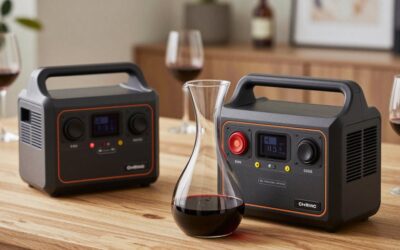
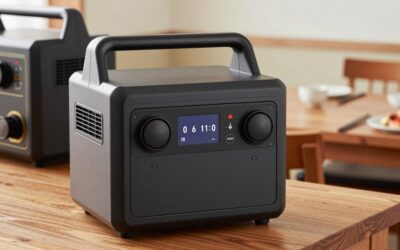
The Bluetti Pioneer Na stands out because of its chemistry. Instead of lithium iron phosphate, it uses sodium-ion cells, which hold up far better in the cold. That makes it an interesting choice for a job most power stations struggle with: running a refrigerator that lives in an unheated garage, workshop or cabin during a winter outage. With roughly 900Wh of storage and a 1,500W inverter, it can start and run a typical fridge. This guide explains the runtimes, why the sodium-ion chemistry matters for cold-location fridges and what to check before you buy.
Pioneer Na in brief
Bluetti announced the Pioneer Na as the first sodium-ion portable power station. Class figures, which you should confirm against Bluetti’s current spec sheet: about 900Wh capacity, 1,500W continuous AC output, a higher resistive-only mode around 2,250W, fast AC charging and a weight around 35 pounds, heavier than a lithium unit of similar capacity. It is not expandable. Bluetti highlights cold performance: charging down to about 5°F and discharging to about -13°F, with most of its capacity still available in deep cold. Availability has varied since launch, and at least one reviewer has reported it being discontinued in some markets, so check current stock before planning around it.
Starting and running a fridge
A full-size fridge compressor typically surges to 600 to 1,200W for a moment on startup. The Pioneer Na’s 1,500W continuous rating covers that comfortably, leaving room for small extra loads. Runtimes, assuming about 765Wh usable after inverter losses:
| Refrigerator | Daily use (70°F room) | Runtime at 70°F | Runtime in a 35°F garage* |
|---|---|---|---|
| Compact 4.5 cu ft | ~0.7 kWh | ~26 hours | ~2 days+ |
| Top-freezer 18 cu ft | ~1.1 kWh | ~17 hours | ~1.3-1.5 days |
| French-door 25 cu ft | ~1.7 kWh | ~11 hours | ~16-20 hours |
*A fridge in a cold garage runs its compressor less because it loses less heat, but see the caution below about freezer compartments.
Why sodium-ion matters for cold-location fridges
Charging in the cold
Most lithium power stations should not be charged below freezing, which is a problem if the fridge and power station share an unheated garage. The Pioneer Na’s rated charging floor, around 5°F, means you can leave it beside a garage fridge through a cold snap and still recharge it from solar or a generator window without carrying it inside.
Capacity in the cold
Lithium cells lose a significant share of available capacity when cold. Bluetti claims the Pioneer Na keeps most of its capacity even well below freezing, so your runtime estimates stay closer to the table.
A catch with garage fridges
Many standard refrigerators are not designed to operate in very cold rooms. When the garage drops below roughly 40 to 50°F, the thermostat in the fresh-food section rarely calls for cooling, and the freezer compartment can warm up. Check your fridge’s manual for its rated ambient temperature range, or consider a garage-ready model.
Recharging and safety
With a combined AC and solar input in the 1,900W class, the Pioneer Na recharges quickly. If you use a gas generator, run it outdoors at least 20 feet from the house with the exhaust aimed away, never inside the garage even with the door open, and never on a porch. Keep CO alarms in the house, especially in rooms adjoining the garage. If you want the power station to feed the fridge’s own circuit, hire a licensed electrician to install an inlet with a transfer switch or interlock. Never backfeed an outlet with a double-male cord.
FAQ
Is sodium-ion safer than lithium?
Sodium-ion cells are generally considered to have lower thermal runaway risk, and they tolerate cold better. They are also heavier for the same capacity. Follow the same basic care: ventilation, no water exposure and no damaged units.
Would a larger lithium station be better for an indoor kitchen fridge?
For a fridge in a heated kitchen, a lithium unit with more capacity per pound may be more practical. The Pioneer Na’s advantage appears mainly in cold locations.
Bottom line
The Bluetti Pioneer Na can run a typical refrigerator for roughly 11 to 26 hours and handles startup surges easily. Its real advantage is sodium-ion cold tolerance, which makes it a strong option for garage, cabin or workshop fridges in winter, provided you can find it in stock and your fridge is rated for cold rooms.
Write Your Review
No reviews yet. Be the first to share your experience!