
🛒 Best Price Today on Amazon
Prime members get fast, free shipping on everything above, plus member-only deals. New members get a 30-day free trial — cancel anytime.
- Decide These 3 Things First
- Generator Size and Starting Wattage
- Power Type, Fuel, and Transfer Method
- Construction, Weather Protection, and Connections
- Performance, Runtime, Noise, and Maintenance
- Price Tiers: What You Get
- Warranty and Service Coverage
- Delivery, Weight, and Assembly
- Spec Checklist
- Red Flags
- FAQ
A power outage is most dangerous when heavy rain is already filling the sump pit. Many homeowners make the same mistake: they buy a generator based only on the pump’s running wattage, overlook startup surge, or assume a small battery backup can run indefinitely. Others choose an oversized portable generator that is difficult to store, unsafe to operate indoors, or impossible to connect correctly.
This generator buying guide for sump pumps focuses on the specifications that affect real basement protection: starting watts, running watts, runtime, transfer method, fuel, weather exposure, and the size of your pump. The right choice depends on whether you need emergency power for a few hours, overnight coverage, or a system that can operate automatically while nobody is home.
As an Amazon Associate we earn from qualifying purchases at no extra cost to you.


Decide These 3 Things First
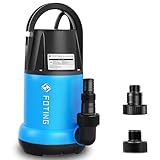
- Identify the pump’s actual electrical demand. Check the motor nameplate for voltage, amperage, horsepower, running watts, and any listed starting watts. A common 1/3-horsepower sump pump may use roughly 800 to 1,200 starting watts and 500 to 800 running watts, while a 1-horsepower pump can require approximately 2,000 to 4,000 starting watts and 1,000 to 1,800 running watts. Exact requirements vary by motor design.
- Decide whether you want portable, standby, or battery power. A portable gas or dual-fuel generator must be started and connected during an outage. A standby generator can start automatically but requires professional installation. A battery backup system is quiet and usable indoors, but its runtime depends on battery capacity and pump cycling.
- Estimate how long the pump may need to run. A pump that runs for 10 minutes each hour has a very different energy requirement from one that runs continuously. Measure or estimate the pump’s duty cycle during heavy rain before choosing a battery or fuel capacity.
Generator Size and Starting Wattage
Generator sizing begins with two numbers: running watts and starting watts. Motors draw a brief surge when they begin, often two to four times their normal operating demand. A generator that can supply 700 running watts but only 900 starting watts may fail to start a pump that needs 1,500 watts for a few seconds.
For many 1/3- to 1/2-horsepower sump pumps, a generator in the 2,000- to 3,000-watt range provides a practical margin. A 3/4- to 1-horsepower pump may require a 3,500- to 5,000-watt generator, particularly if a refrigerator, furnace blower, or other motor will share the circuit. Do not add only the running wattage. Add the highest starting surge to the other appliances that may operate at the same time.
For example, a pump listed at 800 running watts with a 2,000-watt starting requirement, plus a 600-watt refrigerator, calls for at least 2,600 starting watts before adding safety margin. A generator rated around 3,000 to 3,500 starting watts would be a more comfortable match than a 2,000-watt unit.
Power Type, Fuel, and Transfer Method
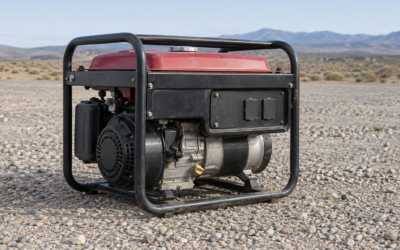
Portable gas generators are widely available and usually offer the best wattage per dollar. Typical useful sizes for sump-pump backup cost about $400 to $1,200, depending on output and features. They must remain outdoors, at least 20 feet from the home and away from doors, windows, and vents because of carbon monoxide. A heavy-duty outdoor-rated extension cord or properly installed inlet is required.
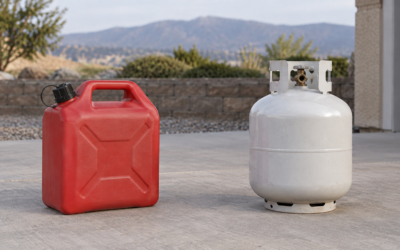
Dual-fuel generators run on gasoline or propane. Gasoline generally provides more power from a similarly sized engine, while propane stores longer and does not degrade as quickly. A 20-pound propane cylinder may run a small generator for several hours, but runtime depends heavily on load and weather. Check the manufacturer’s wattage rating for each fuel; propane output is often lower.
Inverter generators are quieter and produce cleaner power, which can be useful for electronic sump-pump controls. Many compact models produce 2,000 to 4,000 starting watts. They commonly weigh 40 to 100 pounds, compared with 100 to 200-plus pounds for larger conventional generators. Their main disadvantages are higher prices and limited capacity for large pumps.
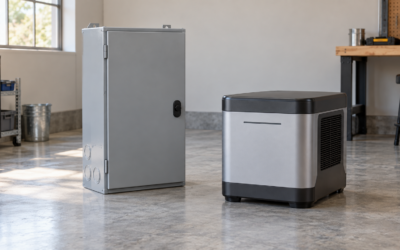
Automatic standby generators connect to a transfer switch and start when utility power fails. Systems commonly range from 7,000 to 24,000 watts and may cost roughly $2,000 to $6,000 before installation. Installation, permits, a gas connection, and an appropriately sized transfer switch can add several thousand dollars. This is the most convenient option for frequent outages or an unattended home.
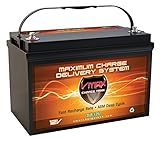
Battery backup systems avoid combustion and can be installed indoors when the manufacturer permits it. A 1,500-watt battery backup, such as the type sold for sump-pump emergencies, may support a pump briefly or intermittently, but wattage alone does not indicate runtime. A 12-volt, 125-amp-hour AGM battery stores about 1,500 watt-hours on paper; usable energy will be lower after inverter losses and the battery’s recommended discharge limit. A battery system is best treated as a bridge or supplement unless its runtime has been calculated for your pump.
Construction, Weather Protection, and Connections
A generator will usually sit on damp ground, in a garage doorway, or near landscaping, so construction matters. Look for a steel or impact-resistant polymer enclosure, rubber-covered outlets, a protected control panel, and a stated operating temperature range. Do not confuse a weather-resistant control panel with permission to run the generator in rain. Most portable generators need a dry, ventilated shelter that does not restrict airflow.
For a portable model, useful connections include a 120-volt, 20-amp household outlet and, for larger units, a 30-amp twist-lock outlet. A 30-amp, 120-volt connection can theoretically carry 3,600 watts, but the generator and wiring must be rated for the load. Use a cord sized for the distance; a 12-gauge cord is a common choice for moderate loads, while long runs or higher amperage may require 10-gauge cable.
Never connect a generator by plugging it into a wall outlet. This can backfeed utility lines and create a lethal hazard. An electrician should install an inlet and transfer switch when the generator will connect to household wiring.
Performance, Runtime, Noise, and Maintenance
Compare both rated running watts and maximum starting watts. A generator advertised as “4,500 watts” may list 4,500 peak watts but only 3,600 rated watts. The rated figure is the more important number for sustained operation.
Runtime is typically stated at 25% or 50% load, so it may not match a sump pump’s cycling pattern. A compact gasoline generator might run 6 to 12 hours on a tank at moderate load, while a larger open-frame unit may use more fuel. Battery systems should be compared by watt-hours, not simply by inverter wattage. A 1,500-watt inverter can start a large load, but a small battery may still last only a short time.
Noise is relevant when the generator operates near a living area. Portable conventional models often produce roughly 65 to 75 decibels at a stated distance, while inverter models may be quieter under light loads. Because manufacturers measure noise differently, compare the test distance and load rather than relying on the phrase “quiet.”
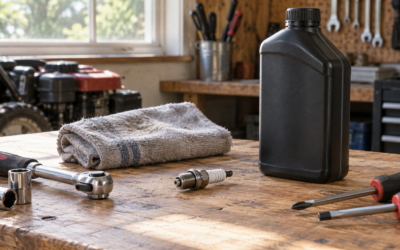
Also check oil-change intervals, cold-start procedures, battery-start capability, fuel shutoff, and low-oil protection. A generator stored for emergencies should be test-run every month or two, with fuel managed according to the manufacturer’s instructions. Keep spare oil, approved fuel containers, and a charged starting battery if the model uses electric start.
Price Tiers: What You Get
Budget: $150 to $500. This range includes small battery inverters, basic portable generators, and replacement batteries. A 12-volt, 125-amp-hour AGM battery may cost around $250 to $350, while a basic 1,500-watt battery backup system may cost about $200 to $350. These options can work for a smaller pump or short outages, but verify starting capability and runtime.
Midrange: $500 to $1,500. Expect 2,500 to 5,000 starting watts, better controls, larger fuel tanks, and more usable outlets. This is often the practical range for a sump pump plus one or two essential appliances. Dual-fuel and inverter models commonly land here.
Premium: $2,000 to $6,000 or more before installation. Automatic standby systems provide automatic operation and enough capacity for multiple circuits. Installation may substantially increase the total. Premium portable generators can also cost $1,500 to $3,000 when they offer high output, low noise, remote starting, or advanced monitoring.
Warranty and Service Coverage
Look for at least a two-year consumer warranty on a portable generator, with longer coverage sometimes available for standby systems. Read whether the warranty covers parts, labor, the engine, the inverter, and the battery separately. Battery warranties may last only one to three years, and AGM batteries often have different replacement terms from the generator itself.
A nearby service network is more valuable than a long warranty that requires shipping a 150-pound generator. Confirm who handles warranty repairs, whether maintenance records are required, and whether commercial or rental use reduces coverage. For standby equipment, ask about annual service plans and typical response times.
Delivery, Weight, and Assembly
Weight affects whether the generator can be moved safely during an emergency. Units under 75 pounds may be manageable by one adult; models from 100 to 200 pounds generally need wheels and a folding handle, and heavier standby components require professional handling. Check the packaged dimensions before ordering through a narrow basement door or stairway.
Portable generators usually require assembly of wheels, handles, feet, or a battery. Allow 20 to 45 minutes for basic assembly, then add time for oil, fuel, battery connection, and testing. A sump-pump battery system may require terminal connections and a compatible charger. Keep the equipment above possible flood levels and leave clearance around engine exhaust and cooling vents.
Spec Checklist
| Spec | Budget | Mid | Premium |
|---|---|---|---|
| Starting watts | 1,500–2,500 | 2,500–5,000 | 7,000–24,000 |
| Rated running watts | 1,000–1,800 | 1,800–4,000 | 5,000–20,000 |
| Best use | Small pump or short outage | Pump plus selected essentials | Automatic whole-home or multi-circuit backup |
| Typical price | $150–$500 | $500–$1,500 | $2,000–$6,000+, before installation |
| Approximate weight | 30–100 lb. | 60–200 lb. | 250–600+ lb. installed system |
| Transfer method | Manual cord connection | Manual inlet or limited battery backup | Automatic transfer switch |
Red Flags
- A listing gives only “peak watts” and omits rated running watts.
- The product claims to power a 1-horsepower pump without stating starting capacity.
- Battery capacity is listed in amp-hours but not watt-hours, voltage, or usable capacity.
- No carbon-monoxide shutoff, grounding instructions, overload protection, or operating manual is provided.
- The generator is advertised for indoor use despite using gasoline, propane, or natural gas.
- Outlets, cords, transfer equipment, or installation costs are excluded from an apparently low price.
- There is no clear warranty contact or authorized repair network.
FAQ
What size generator do I need for a sump pump?
Many 1/3- to 1/2-horsepower pumps work with a generator rated around 2,000 to 3,000 starting watts, but confirm the pump’s nameplate first. A 1-horsepower pump may need 3,500 to 5,000 starting watts or more. Add the starting demand of any other motorized appliance that will run at the same time.
Can I run a sump pump from a battery backup instead of a generator?
Yes, if the inverter can handle the pump’s startup surge and the battery has enough usable watt-hours. Battery backup is quiet and can remain indoors when approved, but it may provide only a few hours of protection during frequent cycling. Consider a high-water alarm or secondary pump for additional protection.
Is an inverter generator better for a sump pump?
It can be. Inverter generators are often quieter, more fuel-efficient at light loads, and provide stable power for electronic controls. However, they may cost more and have lower output than a similarly priced conventional generator. Choose one with sufficient starting watts, not merely a low noise rating.
Can I use a generator in my garage during an outage?
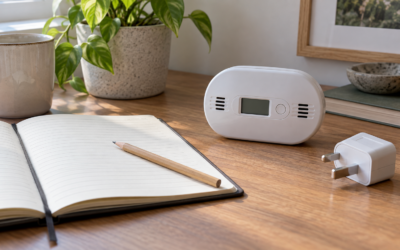
No. Never operate a fuel-burning generator in a garage, basement, shed, or enclosed porch, even with the door open. Carbon monoxide can accumulate quickly. Operate it outdoors at least 20 feet from the home, keep exhaust pointed away from openings, and install carbon-monoxide alarms inside the house.
Write Your Review
No reviews yet. Be the first to share your experience!