
🛒 Best Price Today on Amazon
Prime members get fast, free shipping on everything above, plus member-only deals. New members get a 30-day free trial — cancel anytime.
- Decide These 3 Things First
- Size: Calculate Running Watts and Starting Watts
- Material: Treat the Enclosure as Part of the Purchase
- Construction: Air-Cooled or Liquid-Cooled
- Comfort and Performance: Sound, Voltage, and Fuel
- Price Tiers: Compare the Installed System
- Warranty: Read Coverage by Component
- Delivery and Assembly: Installation Is a System, Not an Afterthought
- Spec Checklist
- Red Flags
- FAQ
Choosing a standby generator is less about buying the biggest machine you can afford and more about matching electrical demand, fuel supply, installation conditions, and transfer equipment. Many homeowners make the same costly mistakes: they add up appliance nameplate watts without accounting for starting surges, assume “whole-home” means every load can run at once, or compare generator prices without including the transfer switch, permits, gas work, pad, and installation.
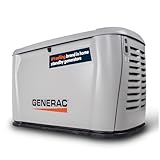
The right answer to “how to choose standby generator size” starts with a load assessment. A 10kW unit may be a sensible choice for essential circuits, while a 22kW or 26kW model may be appropriate for a larger home with central air, electric cooking, a well pump, or a sump pump. The goal is dependable performance—not simply the highest wattage on the product label.
As an Amazon Associate we earn from qualifying purchases at no extra cost to you.


Decide These 3 Things First
- Which loads must operate? List refrigeration, heating controls, sump and well pumps, lights, internet equipment, garage doors, medical equipment, and selected receptacles. Then decide whether air-conditioning, an electric range, a water heater, or an electric dryer is essential.
- What does your electrical service support? A typical home has a 100-amp or 200-amp service. The service rating does not tell you the generator size, but it affects transfer-switch selection and how many circuits can be managed.
- What fuel and installation space are available? Natural gas and liquid propane are common. Fuel pressure, pipe size, tank capacity, setbacks, local code, and access for technicians can eliminate an otherwise suitable model.
Size: Calculate Running Watts and Starting Watts
Generator capacity is measured in kilowatts: 1kW equals 1,000 watts. The running-watt total covers equipment operating continuously; starting watts cover the brief surge required by motors and compressors. A refrigerator may run at roughly 100 to 400 watts but need 800 to 1,200 watts to start. A sump pump might use 800 to 1,500 running watts and require 2,000 to 3,000 starting watts. Central air-conditioning can create an even larger surge.
Do not simply add every maximum number together. A qualified installer can perform a whole-home load calculation and account for motor-starting demand, diversity, and load-management modules. As a rough planning framework, a 10kW generator is often suited to essential circuits in a modest home; 14kW can cover more everyday loads; 22kW to 26kW is more appropriate when the homeowner wants broader whole-home coverage. These are starting points, not guarantees.
For example, a 10kW unit cannot automatically run a 4-ton air conditioner, electric water heater, range, dryer, refrigerator, and well pump simultaneously. A larger generator may still need smart load shedding, which temporarily disconnects lower-priority equipment when a high-demand appliance starts. Ask whether the quote includes the modules and wiring, not just the generator.
Material: Treat the Enclosure as Part of the Purchase
Most residential standby generators use a corrosion-resistant aluminum or galvanized-steel enclosure. Aluminum is lighter and generally resists rust well, while steel can be durable but may require more attention in coastal or high-humidity environments. Powder-coated finishes help, but no enclosure is maintenance-free.
Check the enclosure’s dimensions before ordering. Typical air-cooled residential units are approximately 24 to 30 inches wide, 25 to 35 inches deep, and 40 to 50 inches high. Keep manufacturer-required clearances from walls, windows, doors, vents, and combustible materials; local rules can be stricter than the product manual. In salt air, ask about marine-grade options, fasteners, and the recommended cleaning schedule.
Construction: Air-Cooled or Liquid-Cooled
Most 10kW to 26kW residential generators are air-cooled and use a fan to manage engine temperature. They are usually simpler and less expensive to install than liquid-cooled commercial-style equipment. A liquid-cooled generator may be preferable for very large homes, extended runtimes, or heavy continuous loads, but it costs more and generally requires more space and service planning.
Weight matters during delivery. Residential standby units commonly weigh about 350 to 600 pounds, though exact weight varies by model and transfer equipment. Confirm that the installer will provide a level, code-compliant concrete or composite pad and has a plan for moving the generator from the delivery vehicle to its final location.
Construction also includes the engine, alternator, control board, battery, and transfer switch. Ask how the unit exercises itself, whether the exercise schedule is programmable, and whether the controls display fault codes. An automatic exercise cycle is useful, but it does not replace annual maintenance.
Comfort and Performance: Sound, Voltage, and Fuel
Standby generators are not silent. Compare the manufacturer’s sound rating at a stated distance and load rather than relying on vague terms such as “quiet.” Placement near a bedroom, patio, or neighbor’s property can make a meaningful difference. Never place the unit in a garage, enclosed porch, crawlspace, or other area where exhaust can accumulate.
Most residential models provide 120/240-volt service for standard household circuits. Confirm the generator’s rated output on the fuel you will use. Natural-gas output can differ from liquid-propane output, and a model advertised as 14kW may not deliver the same capacity on every fuel source. The installer must also verify gas pressure and pipe sizing. A long run or undersized line can prevent the engine from operating correctly.
Look for voltage regulation, overload protection, and a controller that can report status or maintenance alerts. Cellular monitoring can be convenient, but it may involve a subscription and does not replace an in-person inspection.
Price Tiers: Compare the Installed System
Product pricing changes by retailer, region, fuel configuration, and included equipment. As a reference point, recent example prices place a 10kW whole-home generator with transfer switch and cellular capability around $3,700, while a 14kW package is about $5,255. Larger examples include a 26kW model near $6,317 and a 22kW model near $6,506. Treat these as product-price benchmarks, not complete project costs.
A practical planning range is roughly $3,500 to $5,000 for a smaller generator package, $5,000 to $7,000 for many 14kW to 22kW systems, and $6,000 to $9,000 or more for larger-capacity equipment and upgraded transfer systems. Installation can add several thousand dollars depending on electrical upgrades, gas work, trenching, permits, and site access. A difficult installation may cost more than the generator itself.
Request an itemized quote showing generator, transfer switch, pad, wiring, gas line, regulators, permits, startup, monitoring, and future maintenance. The lowest equipment price is not necessarily the lowest ownership cost.
Warranty: Read Coverage by Component
Residential standby warranties commonly cover the generator for several years or a specified number of operating hours, but terms vary by brand, use, registration, and whether an authorized dealer performs installation. Engine, alternator, controller, battery, and transfer switch may have different coverage.
Ask four specific questions: Is labor included? Are parts covered for the full term? Does commercial or extended operation change coverage? What maintenance records are required? A battery may be treated as a wear item, and damage caused by improper fuel pressure, flooding, rodents, or neglected maintenance may be excluded.
Delivery and Assembly: Installation Is a System, Not an Afterthought
Before delivery, measure gates, driveways, steps, and the proposed pad location. Provide at least the generator’s full shipping dimensions and weight to the installer, not just its footprint. Confirm whether a crane, lift gate, or specialized cart is needed.
The transfer switch is central to safe operation. A 100-amp switch may serve a selected-load panel, while a 200-amp service-rated switch is often used for broader whole-home coverage. The correct choice depends on the home’s service, panel configuration, and load calculation. Installation should include grounding, disconnects, gas connections, startup testing, and homeowner instruction.
Spec Checklist
| Spec | Budget | Mid | Premium |
|---|---|---|---|
| Typical capacity | 10kW | 14kW–22kW | 22kW–26kW+ |
| Best fit | Essential circuits | Most household loads | Broad whole-home coverage |
| Transfer switch | 100A or selected-load | 100A–200A | 200A service-rated or managed-load system |
| Enclosure | Aluminum or coated steel | Corrosion-resistant aluminum | Upgraded finish or coastal-focused construction |
| Typical footprint | About 24–30 by 25–35 inches | About 24–30 by 25–35 inches | About 30–35 by 30–40 inches |
| Planning product price | $3,500–$5,000 | $5,000–$7,000 | $6,000–$9,000+ |
| Monitoring | Local controller | Wi-Fi or cellular option | Cellular monitoring and expanded alerts |
Red Flags
- A seller recommends a size without asking about air-conditioning, pumps, electric heat, cooking, and service-panel details.
- The quote lists a generator but not the transfer switch, installation, permits, gas work, pad, and startup.
- The advertised wattage does not specify natural-gas versus propane output.
- The proposed location ignores clearance, exhaust direction, flood risk, or access for service.
- The installer promises that every appliance will run simultaneously without discussing load management.
- Warranty language is vague, or the dealer cannot explain who handles service after installation.
- A low price depends on using an undersized gas line, reused wiring, or an unapproved pad.
FAQ
Is a 10kW standby generator big enough for a house?
It can be, if you prioritize essential circuits and manage high-demand appliances. It may run refrigeration, lighting, internet equipment, a furnace blower, and a sump pump, but central air, electric water heating, ranges, and dryers can exceed its practical capacity. Get a load calculation before choosing it.
What size generator runs a whole house?
Many homes fall somewhere between 14kW and 26kW, but “whole house” depends on the home’s appliances and service. A 22kW unit may suit a gas-heated home with moderate electric demand, while a home with multiple large air conditioners or electric heat may need more capacity or load shedding.
Is a larger generator always better?
No. Oversizing raises the purchase and installation price, may increase fuel use, and does not solve an inadequate gas supply or incorrect transfer equipment. Choose enough capacity for starting and running loads, with a reasonable reserve rather than unlimited capacity.
How often does a standby generator need service?
Follow the manufacturer’s schedule, commonly involving periodic oil and filter service, battery inspection, air-filter checks, and an annual professional inspection. Exercise the unit according to its settings and keep the area clear of leaves, snow, and stored items. In 2026, remote monitoring is useful for alerts, but it should supplement—not replace—routine service.
Top picks from this guide
 GeneracGenerac 22kW Whole Home Generator, Transfer Switch & Cellular Capability$6,506 \xc2\xb7 99/100
 GeneracGenerac 10kW Whole Home Generator, Transfer Switch & Cellular Capability$4,329 \xc2\xb7 99/100
 GeneracGenerac 26kW Whole Home Generator, Cellular Capability$7,019 \xc2\xb7 97/100GeneracGenerac 14kW Whole Home Generator, Transfer Switch & Cellular Capability$5,255 \xc2\xb7 95/100
Write Your Review
No reviews yet. Be the first to share your experience!