
🛒 Best Price Today on Amazon
Prime members get fast, free shipping on everything above, plus member-only deals. New members get a 30-day free trial — cancel anytime.
- Decide These 3 Things First
- Size: Match Amperage to the Whole System
- Material: Look for Enclosure and Terminal Quality
- Construction: Choose Mechanical Interlocking and Clear Switching
- Usability and Performance: Prioritize Essential Loads
- Price Tiers: Compare the Complete Kit
- Warranty: Check What Is Actually Covered
- Delivery and Assembly: Measure Before Ordering
- Spec Checklist
- Red Flags
- FAQ
- Top Pick: VEVOR Manual Transfer Switch, 50-Amp 10-Circuit, Prewired Generator Transfer Switch Kit with CS6375 Plug Power Inlet Box, Double-Throw Switch, NEMA 3R, Mechanical Watt Meter, for 12500W Generators
- Best Value: Generator Transfer Switch,50A Pro/Tran2 10-Circuit 2 Manual Transfer Switch,Marked
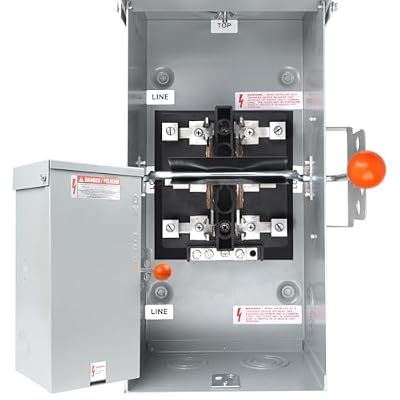
- Premium Choice: MUJURUR 100A Generator Transfer Switch, 24000W Heavy Duty Double Throw Safety Switch, 120/240V Manual Transfer Switch, Stronger Stability, Enlarged NEMA 3R Enclosure for Outdoor, 10-Year Warranty
Choosing transfer switch amperage is less about buying the biggest number on the box and more about matching the switch to your generator, inlet, wiring, and selected household circuits. A 50-amp switch is not automatically safer or more useful than a 30-amp model, while a 100-amp switch may be unnecessary for a portable generator installation.
The most common mistakes are sizing by generator wattage alone, confusing the switch rating with the generator’s actual output, and assuming every transfer switch can handle the same combination of 120- and 240-volt loads. Buyers also overlook enclosure location, wire size, inlet compatibility, and whether a licensed electrician must install the equipment.
As an Amazon Associate we earn from qualifying purchases at no extra cost to you.


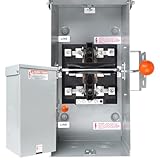
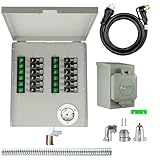
This guide explains how to choose transfer switch amperage in 2026, with practical numbers for portable-generator setups. Always follow the product instructions and local electrical code. Transfer equipment connects directly to a home’s electrical system, so installation should generally be handled by a qualified electrician.
Decide These 3 Things First
- Your generator’s continuous output: Use the running, or rated, wattage rather than the short-term starting wattage. A 12,500-watt generator may have a 50-amp, 120/240-volt connection, but the usable continuous output can be lower than 12,500 watts.
- The circuits you actually need: List essentials such as a furnace, refrigerator, sump pump, well pump, freezer, selected lighting, internet equipment, and a few receptacles. Avoid transferring every circuit simply because the panel has room.
- The service and wiring arrangement: Confirm whether your generator supplies 120 volts only or 120/240 volts, whether the transfer switch uses a 30-amp or 50-amp inlet, and whether the switch is designed for single-pole, double-pole, or multi-circuit loads.
For a rough capacity check, divide watts by volts. At 240 volts, 12,000 watts equals 50 amps. At 120 volts, 12,000 watts equals 100 amps, but a portable generator and transfer switch may not deliver that power in the same way on both legs. The nameplate, generator receptacle, inlet, breaker, and transfer switch must all be compatible.
Size: Match Amperage to the Whole System
Common residential transfer switch ratings include 30, 50, 60, and 100 amps. A 30-amp switch is often appropriate for smaller portable generators producing about 7,000 to 8,000 running watts at 120/240 volts. A 50-amp switch suits many larger portable generators in the 10,000- to 12,500-watt class, provided the generator has a matching 50-amp outlet.
A 100-amp transfer switch does not turn a smaller generator into a 100-amp power source. It may be useful for a larger generator, a service-rated installation, or a future upgrade, but it can be excessive for a portable unit. The weakest component sets the practical limit: a 50-amp inlet, 50-amp breaker, or 50-amp cable still limits the system even if the switch is rated for 100 amps.
Also count circuits and poles. A 10-circuit switch can be enough for essential loads, while a 12-circuit model offers two additional circuits but may not support every high-demand appliance simultaneously. A 240-volt well pump or electric range may use a two-pole position and consume more of the generator’s capacity than several lighting circuits combined.
Material: Look for Enclosure and Terminal Quality
For outdoor installations, choose a weather-resistant enclosure rated for the location. NEMA 3R is a common rating for equipment protected against falling rain, sleet, and external ice formation, but it is not the same as a fully waterproof enclosure for every installation condition. Outdoor equipment should be mounted as directed, with proper cable entries and drip protection where required.
Steel enclosures generally provide a rigid, impact-resistant housing, while polymer components can reduce weight and resist corrosion. Neither material alone proves that a transfer switch is well made. Look for secure hinges, a door that closes without flexing, clearly marked terminals, strain relief, and a cover that does not interfere with the handle.
For an indoor installation, a finished enclosure and readable circuit labels matter more than a highly rugged exterior. Never place an outdoor-rated switch in a location where water can pool around it, and do not assume an indoor model is suitable for a garage, shed, or exterior wall.
Construction: Choose Mechanical Interlocking and Clear Switching
A manual transfer switch should prevent utility power and generator power from being connected at the same time. Double-throw designs and mechanical interlocking are important safety features because they help prevent backfeeding the utility, which can seriously injure line workers and damage equipment.
Prewired kits can simplify installation by reducing field connections. They may include a generator inlet, transfer switch, wiring harness, circuit labels, and a watt meter. However, “prewired” does not mean plug-and-play for every panel. The electrician still needs to verify breaker compatibility, conductor sizing, grounding and bonding, enclosure location, and the panel’s available spaces.
Inspect the switch’s voltage rating as well as its amperage. A 120/240-volt rating is important when you need to operate a two-pole load such as a well pump or boiler. A meter can help monitor demand, but it does not replace a correctly sized breaker or protect against exceeding the generator’s output.
Usability and Performance: Prioritize Essential Loads
The best transfer switch is easy to operate during an outage. Look for a large, positive-action handle, legible “utility/off/generator” markings, and circuit labels that remain readable in low light. A watt meter is useful when several loads cycle on and off, especially refrigerators, pumps, and heating equipment.
Make a load list before shopping. A refrigerator may run at a few hundred watts but require considerably more starting power. A sump pump, well pump, air conditioner, or furnace blower can also have a high startup demand. Electric water heaters, ranges, clothes dryers, and central air-conditioning systems can use thousands of watts each and may exceed the capacity of a portable generator when combined with other loads.
Do not rely on the number of circuits as a wattage rating. Ten 15-amp branch circuits do not mean the generator can provide 150 amps. The transfer switch routes power; it does not create additional capacity. Ask an electrician whether selected circuits should be rearranged so heavy 240-volt loads do not compete with essential 120-volt loads.
Price Tiers: Compare the Complete Kit
Budget manual transfer switches and basic kits commonly cost about $150 to $250. For example, a 50-amp, 10-circuit kit with a manual double-throw switch, inlet box, and NEMA 3R enclosure may be listed near $200. Another 50-amp 10-circuit option may cost about $250, depending on included wiring, meter features, and brand support.
Midrange kits typically fall between $250 and $400. They may offer better labeling, a more polished enclosure, a longer wiring harness, or additional circuit positions. Compare what is included: a generator inlet, plug, conduit fittings, circuit breakers, and cable can otherwise add substantially to the installation cost.
Premium kits can cost roughly $400 to $550 or more. A 50-amp, 12-circuit UL-listed manual kit priced near $480 may appeal to buyers who prioritize documentation, brand support, and a more complete package. At the other end, a 100-amp heavy-duty switch advertised around $75 to $150 deserves especially careful checking. A low price is not a substitute for verified voltage ratings, listing information, compatible terminals, and suitable installation instructions.
Installation frequently costs more than the hardware. Depending on panel access, cable length, wall construction, permits, and local labor rates, professional installation may add several hundred dollars or more.
Warranty: Check What Is Actually Covered
A one-year warranty is common for budget equipment, while two- to five-year coverage is more reassuring for a frequently used or permanently installed switch. Some heavy-duty products advertise warranties as long as 10 years, but read the conditions carefully.
Confirm whether the warranty covers the complete switch, inlet, meter, breakers, and wiring harness. Check whether registration is required, whether labor is excluded, and whether installation by a licensed electrician is a condition of coverage. Keep the receipt, model number, wiring diagram, and photographs of the nameplate.
A recognized safety listing, such as UL certification or another applicable North American certification, can be more important than a long warranty. Verify that the listing applies to the actual transfer switch model rather than only to one accessory in the package.
Delivery and Assembly: Measure Before Ordering
Measure the panel area, wall space, cable route, and distance to the generator inlet before purchasing. A typical manual transfer switch may be roughly 10 to 18 inches tall, 8 to 14 inches wide, and 3 to 6 inches deep, but dimensions vary significantly. Leave the clearance required by the instructions and local code.
Heavier steel units can weigh about 15 to 35 pounds, while compact kits may be closer to 8 to 15 pounds. Confirm that the wall or mounting surface can support the enclosure and that the door can open fully. Outdoor kits should arrive with an appropriate inlet cover and fittings; indoor kits may require separate conduit or a different inlet arrangement.
Before buying, verify delivery contents against the product listing. Some packages include only the transfer mechanism, while others include a 50-amp inlet, plug, conductors, and labels. A missing inlet or incorrectly sized cable can delay installation and eliminate the apparent savings.
Spec Checklist
| Spec | Budget | Mid | Premium |
|---|---|---|---|
| Typical price | $150–$250 | $250–$400 | $400–$550+ |
| Amperage | 30–50 amps | 50–60 amps | 50–100 amps |
| Circuits | 6–10 | 10–12 | 10–12 or more |
| Voltage | 120/240 volts when specified | 120/240 volts | 120/240 volts with detailed documentation |
| Enclosure | Basic indoor or NEMA 3R | Rugged NEMA 3R or improved indoor housing | Heavy-duty housing with verified location rating |
| Useful extras | Inlet and basic labels | Prewired harness and watt meter | Meter, complete kit, stronger documentation and support |
Red Flags
- The listing gives an amperage but no voltage, circuit count, wiring information, or generator-inlet specification.
- The switch is described as “universal” without identifying compatible panel breakers or load-center brands.
- A 100-amp rating is promoted as a way to get more power from a generator with a 30- or 50-amp outlet.
- The enclosure is labeled outdoor-ready without a clear NEMA rating or installation instructions.
- The product lacks mechanical interlocking, a clear double-throw function, or instructions addressing utility-generator isolation.
- The package price seems unusually low because the inlet, conductors, breakers, or mounting hardware are sold separately.
- There is no readable nameplate, certification information, wiring diagram, or manufacturer contact information.
FAQ
How do I calculate the right transfer switch amperage?
Start with the generator’s rated output and its outlet rating. As a basic reference, 7,200 watts at 240 volts equals 30 amps, while 12,000 watts at 240 volts equals 50 amps. Then confirm the switch, inlet, conductors, and breakers are all rated for the same arrangement. Have an electrician account for starting loads and local code.
Is a 50-amp transfer switch enough for a 12,500-watt generator?
It may be appropriate if the generator has a 50-amp, 120/240-volt outlet and its continuous output is compatible. The generator’s actual running wattage, not its advertised peak wattage, is the deciding figure. You may still need to manage high-demand appliances so their startup loads do not overlap.
Can I use a 100-amp transfer switch with a 50-amp generator?
Possibly, if the specific switch and installation are designed for that arrangement, but the system will still be limited by the 50-amp generator outlet, inlet, breaker, and cable. A 100-amp switch does not increase generator capacity and may add cost and installation complexity.
Should I choose a 10-circuit or 12-circuit transfer switch?
Choose based on your essential-load plan rather than the larger number. A 10-circuit switch is often sufficient for a refrigerator, furnace, sump pump, well pump, lighting, and selected receptacles. A 12-circuit model can provide more flexibility, but only if the generator has enough capacity and the panel installation supports the additional circuits.
Top picks from this guide
 Nature's GeneratorNature's Generator 50 Amp Manual Transfer Switch 12-Circuit 120/240V, UL…$480 \xc2\xb7 96/100
 VEVORVEVOR Manual Transfer Switch, 50-Amp 10-Circuit, Prewired Generator Transfer Switch…$200 \xc2\xb7 95/100
 DSGSANOGenerator Transfer Switch,50A Pro/Tran2 10-Circuit 2 Manual Transfer Switch,Marked$250 \xc2\xb7 95/100
 MUJURURMUJURUR 100A Generator Transfer Switch, 24000W Heavy Duty Double Throw…$80 \xc2\xb7 94/100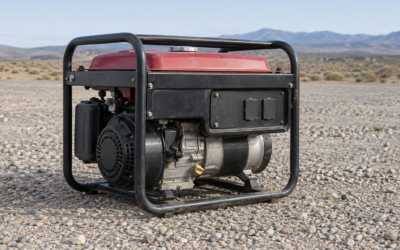
Write Your Review
No reviews yet. Be the first to share your experience!