
🛒 Best Price Today on Amazon
Prime members get fast, free shipping on everything above, plus member-only deals. New members get a 30-day free trial — cancel anytime.
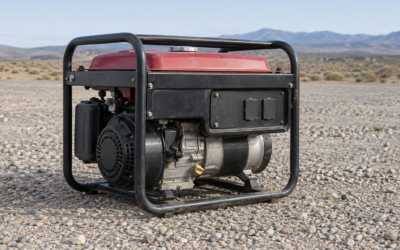
On the shelf at Harbor Freight these two look like adjacent rungs on the same ladder — 8,750 starting watts here, 9,500 starting watts there, a few hundred dollars apart. They are not the same ladder. The Predator 8750 is a conventional open-frame generator with a 420cc engine spinning a fixed 3,600 rpm. The Predator 9500 Dual Fuel is an inverter machine that electronically rebuilds its output waveform and throttles the engine to match load, and it runs on propane as well as gasoline. The 750-watt gap on the sticker is the least important difference between them.
Which one you should buy comes down to three questions: what kind of loads are you feeding, how much do you care about noise and fuel burn during a long outage, and does propane solve a storage problem for you. Below is the comparison in the terms that actually decide it, plus the delivered alternatives at real prices so you can judge whether either Predator is the right spend.
Quick Verdict
Buy the Predator 9500 Dual Fuel Inverter if this is your primary home backup generator and you intend to run it for days at a time. The inverter output is safe for a modern furnace’s ECM blower, a variable-speed mini-split, a residential refrigerator with an inverter compressor, and anything with a circuit board in it. The engine throttles down at part load, which cuts both noise and fuel consumption substantially over an extended outage — the difference between refueling three times a day and twice. Propane capability means it will start after a year in the garage. It has an L14-30R 120/240V twistlock for a transfer switch, electric start, and CO shutoff.
Buy the Predator 8750 if your load list is motors and heating elements, if the machine is a job-site and occasional-outage tool rather than a multi-day survival appliance, and if you would rather spend the difference on a properly installed transfer switch. 7,000 running watts from a 420cc engine is plenty for a well pump, a gas furnace, a fridge, a freezer and lighting. It is cruder in every respect and it will very likely outlast your interest in it.
Sanity check against shipped alternatives: a Westinghouse 9500 Peak Watt Dual Fuel is $949 and a Westinghouse 12500 Dual Fuel is $999 — both conventional, both delivered. The inverter equivalent to the Predator 9500 is the DuroMax XP9500iH at $1,999 or the Pulsar 9500W Dual Fuel Inverter at $1,999. The WEN GN875i open-frame inverter for under $900 is the closest thing to a delivered Predator 8750 with inverter output. Harbor Freight sets Predator pricing in store and it changes with promotions and Inside Track Club membership, so confirm it locally.
Predator 9500 vs Predator 8750 — and the Alternatives
| Model | Running Watts | Starting Watts | Type | Fuel | Price |
|---|---|---|---|---|---|
| Predator 9500 Dual Fuel Inverter | 7,500 (gas) | 9,500 (gas) | Inverter | Gas / propane | Harbor Freight in-store |
| Predator 8750 (420cc) | 7,000 | 8,750 | Conventional | Gasoline | Harbor Freight in-store |
| Westinghouse 9500 Dual Fuel | ~7,500 | 9,500 peak | Conventional | Gas / propane | $949 |
| Westinghouse 12500 Dual Fuel | ~9,500 | 12,500 peak | Conventional | Gas / propane | $999 |
| Westinghouse 13500 Dual Fuel | ~10,500 | 13,500 peak | Conventional | Gas / propane | $1,099 |
| DuroStar DS13000MX | ~10,500 | 13,000 | Conventional | Gas / propane | $899 |
| DuroMax XP13000HX | ~10,500 | 13,000 | Conventional | Gas / propane | $1,399 |
| DuroMax XP9500iH | ~7,600 | 9,500 | Inverter | Gas / propane | $1,999 |
| Pulsar 9500W Dual Fuel Inverter | ~7,500 | 9,500 | Inverter | Gas / propane | $1,999 |
| WEN GN875i Open Frame Inverter | ~7,000 | 8,750 | Inverter | Gasoline | under $900 |
| Generac 12,500 Tri-Fuel | ~9,500 | 12,500 | Conventional | Gas / LP / NG | $1,169 |
How to Choose
The 500-watt running difference is close to irrelevant
7,000 versus 7,500 running watts is a 7% difference. It will not change what you can power. Nothing in a house lives in that gap — you do not have an appliance that runs on 7,200 watts. If you are choosing between these two machines because you calculated a load of 7,300 watts, your real problem is that you are sizing too close to the limit and should be shopping the 9,500-to-10,500 running-watt class instead, which means the Westinghouse 12500 at $999 or the DuroStar DS13000MX at $899.
Power quality is the difference that matters
A conventional generator’s voltage and frequency drift with engine load. Most appliances tolerate it. What does not tolerate it well: variable-speed ECM furnace blowers, inverter-driven mini-splits and heat pumps, modern refrigerators with inverter compressors, well-pump soft starters, and anything with a microprocessor. A furnace control board is a few hundred dollars and a service call in the middle of an ice storm. The Predator 9500’s inverter output removes that risk entirely; the 8750 leaves it on the table. If your heating system is anything newer than a simple single-speed blower, this alone decides the comparison.
Part-load fuel burn over a multi-day outage
The 8750 runs its engine at 3,600 rpm whether you are drawing 7,000 watts or 300. The 9500 inverter drops the engine speed when the load is light, which is most of the time — overnight, when only the refrigerator and a few lights are live, the difference in gallons per hour is substantial. Across a 72-hour outage that can easily be ten or more gallons of gasoline, which is two extra trips to a gas station that may well be closed. This is the practical argument for inverter technology in a backup generator, and it is a stronger one than the noise argument.
Propane is storage insurance, not a performance feature
Every dual-fuel generator produces roughly 10% less on propane than on gasoline, so the 9500’s LP output is meaningfully lower than its gas rating. Size off the propane number if propane is your plan. What propane buys you is a fuel that does not degrade. The single most common reason a backup generator fails when needed is varnished ethanol gasoline in the carburetor bowl after months of sitting. A generator stored dry with a full 20-lb LP tank in the shed starts. That reliability difference is, for a machine you use twice a year, worth more than the output penalty.
Noise, weight and where it lives
The 8750 at full load is loud enough that you raise your voice standing near it, and that is normal for an unenclosed 420cc engine at 3,600 rpm. The 9500 inverter at part load is meaningfully quieter because the engine is not spinning as fast. Both are heavy — the 9500 in particular is a two-person lift onto a truck bed and a genuine effort to move over grass or gravel. Decide before you buy where the machine will sit during an outage, how you will get it there in the rain, and whether that location is at least 20 feet from every opening in the house.
Serviceability is a wash, and it is good on both
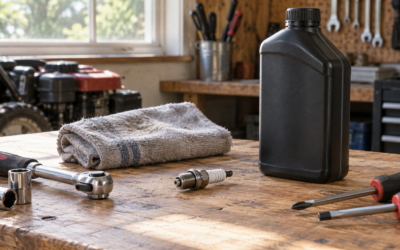
Both machines use engines from Predator’s GX-derived family, and the aftermarket treats them as commodities. A replacement carburetor for the 420cc generator engine — the one in the 8750 — is under $30 on Amazon, with other listings for the same engine family at under $30. Comparable kits exist across the Predator range. Full synthetic 5W-30 suitable for these engines is under $10 a quart, or under $40 for five quarts. A fuel-system rebuild on either machine is an afternoon and less than thirty dollars in parts, which is a real ownership advantage over brands with closed parts channels.
The Picks in Detail
Predator 9500 Watt Dual Fuel Inverter
7,500 running / 9,500 starting on gasoline, inverter output, dual fuel, electric start, 120/240V L14-30R twistlock plus standard 5-20R household receptacles, CO shutoff. This is a home-backup machine first and everything else second. Paired with a transfer switch it will carry a well pump, a gas furnace, a refrigerator, a chest freezer, lighting, and a microwave with sensible load management, and it will do it quietly enough and efficiently enough that a three-day outage is tolerable rather than an ordeal. The drawbacks are mass and price — it is the most expensive Predator portable, and it is not a machine one person moves casually. Against the $1,999 DuroMax and Pulsar equivalents, its value proposition is obvious.
Predator 8750 Watt (420cc)
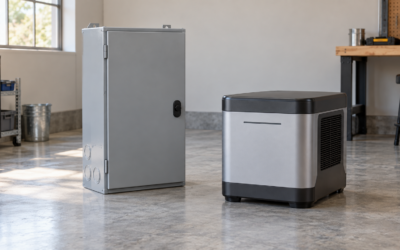
7,000 running / 8,750 starting, conventional 3,600-rpm design, 120/240V with an L14-30R twistlock, electric start on most versions. There is nothing clever about it, which is the point. It has a decade of field history, an enormous parts supply, and no electronics to fail. For a job site, a barn, a well pump, a water heater, or a rural property where noise is nobody’s business, it is a rational purchase and the money saved goes straight into the transfer switch installation — a Reliance 31406CWK 30A 6-circuit for under $350 or a Reliance 310C Pro/Tran2 10-circuit at $429, plus an electrician.
If neither is in stock: Westinghouse 12500 Dual Fuel — $999
Conventional rather than inverter, but 9,500 running watts for under a thousand dollars delivered is a lot of margin, and margin solves problems that cleverness does not. Remote electric start, 120/240V, dual fuel. If you want the least planning and the fewest compromises on capacity, this is the one to buy.
If you want inverter output delivered: DuroMax XP9500iH — $1,999
The direct shipped equivalent of the Predator 9500 inverter: same output class, same dual fuel, same clean waveform, roughly twice the money. It exists in this comparison mainly to show you what the Predator’s capability is worth on the open market.
Related guides: best harbor freight generator for home backup, best predator generator for rv use, harbor freight generator parts availability, harbor freight generator sale schedule, harbor freight generator warranty explained
FAQ
Will either of these run my whole house?
Both will run a typical 1,500 to 2,500 sq ft home with gas heat, a gas water heater, a well pump and normal appliances — through a transfer switch, with load management. Neither will run electric heat, an electric water heater, an electric range, and central air conditioning simultaneously. If those are on your list, you are shopping 12,500 watts and up, or a permanently installed standby unit.
Is the inverter model harder to repair?
The engine and fuel system are equally serviceable. The inverter module itself is the one component that is not a roadside repair — if it fails, you are dealing with Harbor Freight rather than a socket set. In practice, fuel-system problems account for the overwhelming majority of generator failures on both designs, and those are identical to fix.
Which one is better for running power tools?
Either, for corded tools with brushed motors — a circular saw or a compressor does not care about waveform. Battery chargers, inverter-drive compressors, and anything with electronic speed control prefer the 9500’s clean output. If the job site runs a table saw and a compressor, the 8750 is the cheaper right answer.
Can I connect either one to my house without an electrician?
No. A generator feeding house circuits requires a manual transfer switch or a listed panel interlock kit with an exterior inlet, and in nearly every jurisdiction that is licensed electrical work requiring a permit. Never connect a generator by backfeeding a dryer or range receptacle with a double-male “suicide cord” — it bypasses the panel’s overcurrent protection, leaves energized prongs exposed on the cord, and sends lethal voltage back through your service transformer onto utility lines where crews may be working. People have been killed this way.
Where is it safe to run either generator?
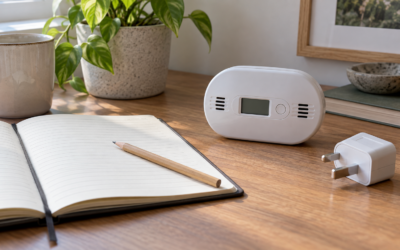
Outdoors, at least 20 feet from the house, exhaust directed away from every window, door, vent and crawlspace opening. Never in an attached garage, even with the door raised. Never in a shed, breezeway, basement, or under a deck. Carbon monoxide from a portable generator is odorless, accumulates to lethal concentrations faster than most people expect, and is responsible for dozens of American deaths each year. If your unit has a CO shutoff sensor, treat it as a final backstop — not as a reason to move the machine closer to the house.
Write Your Review
No reviews yet. Be the first to share your experience!