
🛒 Best Price Today on Amazon
Prime members get fast, free shipping on everything above, plus member-only deals. New members get a 30-day free trial — cancel anytime.
- Top Pick: SoftStart Water Well Pump Soft Starter, ETL Listed, Generator Ready
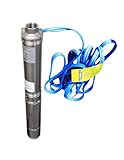
- Best Value: Hallmark Industries MA0343X-4 Deep Well Submersible Pump, 1/2 hp, 110V, 60 Hz, 25 GPM, 150' Head, Stainless Steel, 4"
- Premium Choice: Hallmark Industries MA0414X-7 Deep Well Submersible Pump, 1HP, 110V 60HZ, 33 Gpm, Stainless Steel, Long Life
Choosing the right generator for a well pump depends on more than the pump’s horsepower. A pump may use modest electricity while running, then draw two to five times as much power for a few seconds during startup. The generator must handle both the running load and the startup surge without tripping its breaker or dropping voltage.
The Short Answer
For most residential well pumps, choose a generator rated for 3,000 to 5,000 running watts, with at least 5,000 to 7,500 starting watts. A 1/2-horsepower pump often works with a 3,000- to 4,000-watt generator, while a 1-horsepower pump usually needs 5,000 to 7,500 starting watts.
As an Amazon Associate we earn from qualifying purchases at no extra cost to you.

| Well pump size | Typical running watts | Typical starting watts | Suggested generator rating |
|---|---|---|---|
| 1/3 hp | 700–1,000 W | 2,000–3,000 W | 2,500–3,500 starting W |
| 1/2 hp | 900–1,400 W | 2,500–4,000 W | 3,500–5,000 starting W |
| 3/4 hp | 1,300–2,000 W | 3,500–5,500 W | 5,000–7,000 starting W |
| 1 hp | 1,800–2,500 W | 5,000–7,500 W | 7,000–10,000 starting W |
| 1 1/2 hp | 2,500–3,500 W | 7,000–10,000 W | 10,000–12,000 starting W |
These are planning ranges, not a substitute for the pump’s nameplate. Add the wattage of other equipment that will run at the same time, such as a refrigerator, furnace blower, pressure-tank controls, lights, or a sump pump. For a 240-volt well pump, the generator must also have a compatible 240-volt outlet and transfer equipment.
Standard Sizes
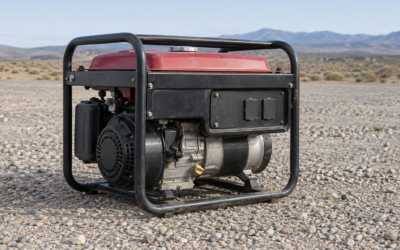
Portable generators are commonly sold by their continuous, or running, wattage. Starting watts may be listed separately and are usually higher. The following standard size classes show both electrical capacity and typical physical dimensions. Dimensions and weights vary by brand, fuel tank size, wheel kit, and sound enclosure.
| Generator class | Running / starting watts | Typical dimensions (L × W × H) | Approximate size in cm | Typical weight | Best use |
|---|---|---|---|---|---|
| 2,000–3,000 W inverter | 2,000–3,000 / 2,500–3,500 W | 24 × 14 × 20 in | 61 × 36 × 51 cm | 45–70 lb | Small pump or emergency essentials |
| 3,500–5,000 W portable | 3,500–5,000 / 4,500–6,500 W | 27 × 22 × 24 in | 69 × 56 × 61 cm | 100–160 lb | Most 1/2 hp pumps and basic home loads |
| 6,000–8,000 W portable | 6,000–8,000 / 7,500–10,000 W | 32 × 27 × 29 in | 81 × 69 × 74 cm | 150–220 lb | 3/4 to 1 hp pumps and larger household loads |
| 10,000–12,000 W portable | 10,000–12,000 / 12,000–15,000 W | 35 × 29 × 33 in | 89 × 74 × 84 cm | 200–300 lb | Large pumps, 240-volt loads, and whole-home backup |
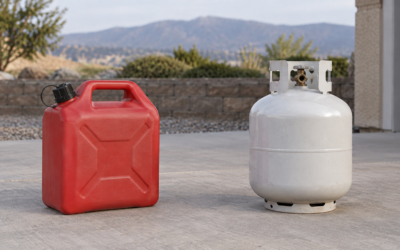
A generator’s physical size matters if it must fit inside a shed or storage closet. Never operate a gasoline, propane, or dual-fuel generator indoors, in a garage, or under an enclosed porch. Place it outdoors, away from doors and windows, with adequate clearance and a properly installed transfer switch or interlock system.
Some pumps use a 120-volt supply, while larger submersible pumps commonly use 240 volts. A 1/2 hp 110-volt pump, such as a typical deep-well model, may be easier to power with a smaller generator. A 1 hp 110-volt pump still needs substantial starting capacity. Check the pump label rather than assuming horsepower tells the whole story.
How to Measure Your Space
- Read the pump nameplate. Record horsepower, voltage, amperage, phase, and frequency. A label may show running amps but not starting watts.
- Measure the generator location. Measure the available length, width, and height in inches. Convert inches to centimeters by multiplying by 2.54.
- Allow operating clearance. Do not measure only the generator body. Leave room around the exhaust, controls, fuel cap, and recoil starter. Follow the manufacturer’s clearance instructions.
- Check the outlet type. Confirm that the generator supplies 120 volts, 240 volts, or both as required. A standard household outlet cannot power every well-pump configuration.
- Measure cable distance. A long extension cord can cause voltage drop. Use a short, heavy-gauge cord rated for the pump’s amperage, or have an electrician install a generator inlet.
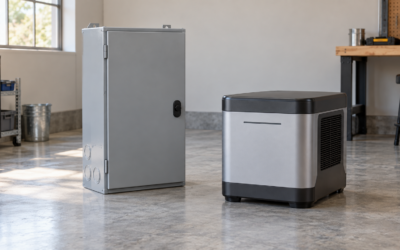
- Measure the transfer equipment space. A transfer switch or approved interlock is installed near the electrical panel. It must be compatible with the panel and generator output.
- Add simultaneous loads. Add the well pump’s running watts to appliances that must operate during an outage. Add the largest startup load, rather than adding every startup surge at full strength.
If the pump’s amperage is known, estimate running watts with the formula volts × amps = watts. For example, a 120-volt pump drawing 10 amps uses about 1,200 running watts. This does not reveal the motor’s exact startup demand, so the generator should still have a generous surge rating.
By Room or Use Case
Rural home with a pressure tank
A rural home usually needs water, refrigeration, lights, internet equipment, and heating controls during an outage. For a 1/2 hp pump, a 4,000- to 5,000-running-watt generator is a practical target. For a 1 hp pump, consider 7,000 running watts or more, especially if the furnace blower or refrigerator may start at the same time.
Small cabin or seasonal property
A cabin with limited electrical demand may use a 2,500- to 3,500-watt generator for a small 1/3 or 1/2 hp pump. Turn off electric water heaters, air conditioners, and space heaters before starting the pump. A compact inverter generator can be quieter and easier to store, but verify its surge output and whether it supplies the required voltage.
Irrigation or livestock watering
Irrigation pumps may run for longer periods and can be larger than household well pumps. A 3/4 or 1 hp pump generally calls for a 6,000- to 8,000-watt generator, with enough fuel capacity for the intended watering cycle. Avoid sizing only for the pump if electric gates, timers, fans, or stock-tank heaters will operate simultaneously.
Solar or 24-volt well-pump system
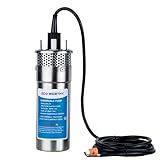
A 24-volt pump, such as a small alternative-energy well-pump system, does not connect directly to a conventional 120-volt generator. It may use a battery bank, charge controller, inverter, or dedicated solar controller. Size the inverter and batteries for startup current, then use the generator to recharge the system if needed. A 24-volt pump’s listed gallons per minute and maximum lift also affect how long it must run.
Generator with a soft starter
A soft starter reduces the motor’s startup surge, potentially allowing a smaller generator to start a compatible pump. A listed well-pump soft starter may cost roughly $300 to $500, while a basic 1/2 hp deep-well pump may cost about $125 to $200 and a 1 hp model may fall in a similar broad range depending on specifications. Confirm voltage, horsepower, wiring, and installer requirements before purchasing. A soft starter does not make an undersized generator safe or suitable for every motor.
Common Sizing Mistakes
- Using running watts only: The generator may handle normal operation but fail when the pump motor starts.
- Relying on horsepower alone: Voltage, amperage, pump design, well depth, and motor efficiency change the actual load.
- Ignoring 240 volts: A generator with only 120-volt outlets cannot power a 240-volt pump correctly.
- Adding every surge at once: List the loads that truly operate together and prioritize the pump, refrigeration, heat, and safety equipment.
- Using a light extension cord: Undersized cords can cause voltage loss, overheating, and motor damage.
- Backfeeding the house: Never connect a generator directly to a wall outlet. Use a code-compliant transfer switch or interlock installed by a qualified electrician.
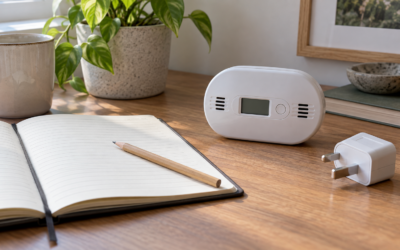
- Operating indoors: Carbon monoxide can become fatal quickly. Use a carbon-monoxide alarm and keep the generator outdoors.
FAQ
What size generator do I need for a 1/2 hp well pump?
Plan on at least 3,500 starting watts, with 4,000 to 5,000 running watts preferred when other household loads are connected. Confirm the pump’s voltage and amperage before buying.
Can a 2,000-watt generator run a well pump?
It may run a very small pump with low startup demand, but many 1/2 hp pumps will exceed a 2,000-watt generator’s surge capacity. Do not rely on this size unless the pump and generator specifications specifically match.
Do I need a 240-volt generator for a well pump?
Only if the pump requires 240 volts. Check the pump nameplate and have an electrician verify the circuit. A 120-volt pump needs a compatible 120-volt output, while a 240-volt pump requires a generator that can deliver 240 volts through the proper connection.
Will a soft starter let me use a smaller generator?
Often, a correctly matched soft starter can reduce startup demand, but it does not eliminate the need for adequate running watts. Treat it as a way to improve compatibility, not as permission to select a dramatically undersized generator.
Write Your Review
No reviews yet. Be the first to share your experience!