
🛒 Best Price Today on Amazon
Prime members get fast, free shipping on everything above, plus member-only deals. New members get a 30-day free trial — cancel anytime.
Comparing Honda and Westinghouse on price, power and reliability reveals two very different value propositions. Honda charges a steep premium for engines that are quiet, efficient and famously durable. Westinghouse delivers similar headline wattage for roughly half the money, and often adds dual fuel and remote start on top. Here is how the two brands compare when you break the decision into those three pillars and do the ownership math.
Price
| Class | Honda typical range | Westinghouse typical range | Typical gap |
|---|---|---|---|
| ~2,000–2,500W inverter | $1,100–1,400 | $550–800 | 45–55% less for Westinghouse |
| ~3,000–4,500W inverter | $2,000–3,000 | $900–1,400 | ~50% less |
| ~9,000–12,000W open frame | $4,000–6,000+ | $1,100–1,800 | 60–70% less |
Cost over ten years
Purchase price is only part of the equation. If a Honda 2,200W-class unit costs $1,250 and resells for $700 after ten years, net cost is about $550. A $650 Westinghouse that resells for $200 costs $450 net. The gap narrows dramatically for owners who maintain and eventually sell their equipment. For storm-only owners who keep a generator until it dies, the upfront savings matter more.

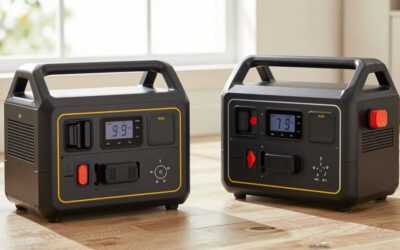
Honda EB2200i 2200 Watt 120V Super Quiet Inverter Generator (EB2200ITAN)
Included for 'Honda vs Westinghouse Generators: Price, Power, and Reliability Compared' as a relevant option in this category; details come from the product listing.
View on Amazon
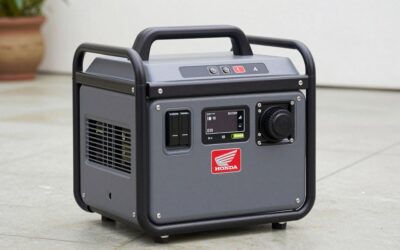
Honda EU2200i Companion 2200 Watt Inverter Generator (EU2200ITAN5)
Included for 'Honda vs Westinghouse Generators: Price, Power, and Reliability Compared' as a relevant option in this category; details come from the product listing.
View on Amazon
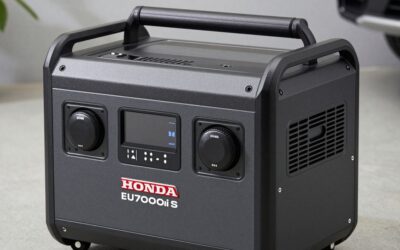
Honda EU3000iS 3000 Watt Inverter Generator (EU3000IS1AN)
Included for 'Honda vs Westinghouse Generators: Price, Power, and Reliability Compared' as a relevant option in this category; details come from the product listing.
View on Amazon
Honda EU2200i 2200 Watt Inverter Generator, Super Quiet 120V Gas Powered Portable Generator for Camping or Home Backup Power Supply, Up to 8.1 Hour Run Time (EU2200ITAN)
Included for 'Honda vs Westinghouse Generators: Price, Power, and Reliability Compared' because the listing specifies Up to 8.1 Hour Run Time (EU2200ITAN), details this guide uses to compare options.
View on AmazonPower
Both brands’ inverters produce clean power with low total harmonic distortion, safe for electronics. Where they differ is headroom and range. Westinghouse offers more intermediate sizes and larger dual-fuel units, making it easier to cover big surge loads like a 1 HP well pump or a 15,000 BTU RV air conditioner without paying premium prices.
| Common need | Running W needed | Starting W needed | Class to buy |
|---|---|---|---|
| Camping: fridge, lights, fans | 400–900 | 1,200–1,800 | 2,000–2,500W inverter |
| RV with 13,500 BTU AC | 1,300–1,800 | 2,800–3,500 | 3,000–3,500W inverter (or soft start) |
| Home essentials + well pump | 3,500–5,500 | 7,000–9,000 | 9,000W+ open frame |
Parallel capability
Both brands support parallel kits on many small inverters, letting you pair two 2kW-class units for roughly double output. This is a strong strategy with Honda because two small units are easier to carry than one large premium unit, and with Westinghouse because two budget units still cost less than one large Honda.
Reliability
Honda’s reliability reputation rests on engine design proven over millions of units, tight machining and extensive parts availability. Westinghouse units are well regarded for their price class, with a multi-year limited warranty that covers the typical early-failure window.
Common failure points for both
- Carburetor varnish from stale ethanol gasoline — the leading cause of no-start calls.
- Low oil shutdown on uneven ground or overdue oil changes.
- Pull-start fatigue on older units; electric start batteries that are left uncharged.
Westinghouse’s dual fuel units can dodge the first issue by running on propane. Honda owners typically rely on fuel stabilizer and running the carburetor dry before storage.
| Maintenance task | Interval | Applies to |
|---|---|---|
| First oil change | After 20–25 hours break-in | Both |
| Routine oil change | Every 50–100 hours or yearly | Both |
| Spark plug check | Every 100 hours or yearly | Both |
| Exercise run | 15–20 min monthly | Both |
Verdict by buyer type
Frequent campers, RVers who boondock for weeks and contractors running tools daily get the most value from Honda’s durability and quietness. Homeowners who need backup a few times a year, or anyone who wants dual fuel and remote start without a premium price, will be well served by Westinghouse.
Fuel efficiency in practice
Honda’s small engines are among the most fuel-efficient in the category, which matters when you run many hours. At a steady 500W load, a 2kW-class Honda can stretch a gallon of gasoline a little further than many value competitors. Over a 200-hour camping season, a 10–15% efficiency edge might save 5–8 gallons — real, but only $20–40 at typical fuel prices. For occasional backup, the difference is negligible. Westinghouse’s advantage is propane on dual-fuel units: fuel stored for years in a cylinder is ready when a storm arrives, with no carburetor cleaning. Weigh these two efficiencies — fuel burned per hour versus fuel readiness over time — against your usage pattern before deciding which brand is truly cheaper to own.
FAQ
Does Honda really last longer than Westinghouse?
Under heavy, frequent use, Honda engines have a stronger long-term track record. For occasional use of under 50 hours a year, both brands typically outlast the owner’s need if maintained.
Which is better for an RV air conditioner?
Either works if sized properly. A 3,000W+ inverter from either brand, ideally with a soft-start kit on the AC, handles a 13,500 BTU unit. Westinghouse gives you that capability for less money.
Bottom line
On price, Westinghouse wins decisively. On power, the brands are comparable, with Westinghouse offering more size options. On reliability, Honda holds the edge for heavy users. Decide by hours per year: high-hour users should lean Honda, occasional users Westinghouse.
Write Your Review
No reviews yet. Be the first to share your experience!