
🛒 Best Price Today on Amazon
Prime members get fast, free shipping on everything above, plus member-only deals. New members get a 30-day free trial — cancel anytime.
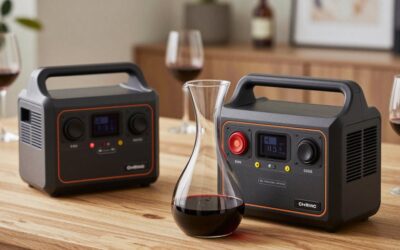
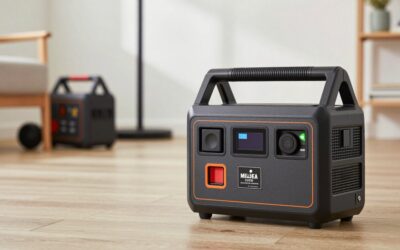
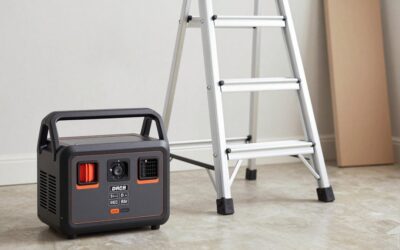
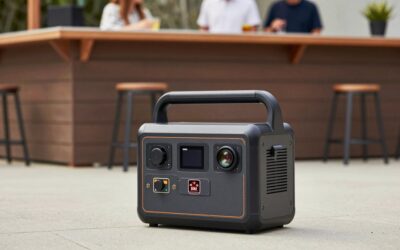
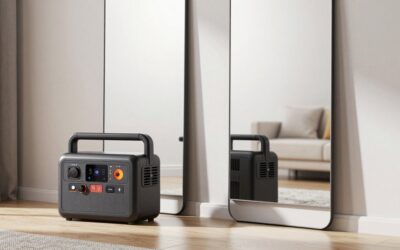
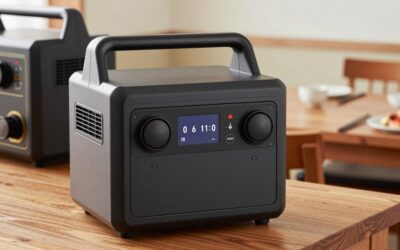
The Bluetti AC180 has been a popular mid-size power station for several years, and it still makes a lot of sense for hurricane prep. It combines a little over a kilowatt-hour of LFP storage with enough output to run a microwave or small window air conditioner, and it recharges quickly from a wall outlet. For coastal households that want more than a phone charger but less than a whole-home system, it hits a practical middle ground.
Spec summary
Bluetti rates the AC180 at about 1,152 Wh of LFP capacity, roughly 1,800 W of continuous output with a higher Power Lifting mode for resistive loads, up to about 500 W of solar input and fast AC charging to around 80% in under an hour. It weighs about 35 pounds. It is not designed as an expandable system, and availability varies by region. Confirm current specs and stock before buying.
What it can handle during a hurricane outage
| Load | Draw | Runtime estimate (about 1,000 Wh usable) | Notes |
|---|---|---|---|
| Full-size refrigerator | 75–90 W average | 11–13 hours | Keeps food cold overnight |
| CPAP + box fan | 80 W | about 12 hours | One full night plus margin |
| Communications kit | 30 W | about 33 hours | Phones, radio, router, lights |
| 5,000 BTU window AC | 450–500 W | about 2 hours | Cooling bursts in the hottest hours |
| Microwave, 1,000 W | about 1,500 W | about 40 minutes of use | Short cooking sessions |
Real results depend on temperature, appliance age and how often doors are opened. Test your key loads before storm season.
Fast charging during unstable power
The AC180’s quick AC charging is a practical hurricane asset. When the grid comes back for an hour or two between outages, or when a neighbor’s power is restored first, you can refill most of the battery quickly. That flexibility often matters more than raw capacity in the days after a storm.
Solar after the storm
With up to about 500 W of solar input, two 200 W panels in clear coastal sunshine can produce roughly 1,400 to 1,800 Wh per day. That can refill the battery and run a fridge during daylight, extending your coverage indefinitely in good weather. Bring panels inside before the storm and set them up once winds and debris have cleared.
Using it with a generator
Many households pair a mid-size battery with a small gas generator. Run the generator for an hour or two to cool the fridge and recharge the AC180, then shut it down and let the battery run silently overnight. That cuts fuel use and generator noise significantly. Keep the generator at least 20 feet from the house, never in a garage, carport, porch or under the house, with exhaust facing away from openings. Install battery CO alarms on every floor.
Limitations
- No 240V output and no practical whole-home backup.
- Capacity is fixed, so solar or a second battery is needed for multi-day refrigeration.
- At about 35 pounds, it is portable but not light enough to carry comfortably over long distances.
Home connection note
Plug appliances directly into the AC180 with heavy-duty extension cords. If you want to power hardwired circuits, consult a licensed electrician about a transfer switch sized for its output; never backfeed through a wall outlet.
A three-day storm routine
Here is one way to use the AC180 across a typical multi-day outage. Day one: keep it on wall power until the grid drops, then run the fridge overnight and charge phones. Day two: if skies are still stormy, unplug the fridge in the morning (a closed, full fridge stays safe for about four hours), run it again in the afternoon and evening, and keep a CPAP or fan powered at night. Day three: as the sun returns, set up panels by mid-morning, run the fridge directly while solar input is strong and let the battery refill for the night ahead. Rotating loads like this lets a roughly 1 kWh battery cover far more than its raw capacity suggests.
Flood-zone placement
If you live in a storm-surge or flash-flood area, keep the AC180 on a counter or upper floor, never on the floor of a garage or ground-level utility room.
FAQ
Is the AC180 enough to get through a three-day outage?
For communications and medical devices, yes. For a refrigerator across three days, you will need solar or regular recharging.
Is it still a good buy compared with newer models?
It remains capable, but check prices against newer stations with similar capacity. Discounts on older models can make it excellent value.
Bottom line
The Bluetti AC180 is good for hurricane season as a mid-size, fast-charging battery that keeps food cold overnight, runs medical devices and handles short cooling or cooking sessions. Pair it with solar or a safely placed generator for longer outages. Households needing multi-day whole-kitchen backup should look at larger systems.

Write Your Review
No reviews yet. Be the first to share your experience!